Coreff and Lancelot
Region & History
How far back does brewing in Brittany go? The earliest traces lead to 1624, when John Fagan, an immigrant from Ireland, turns up as a brewer. In the 18th and especially the 19th century, beer became an everyday fixture in the towns, and immigrants from Ireland, Flanders, Alsace, and Germany founded breweries.
Real brewing dynasties emerged, such as the Graffs in Rennes, the Despinoys in Landerneau, and the Schaeffers and Burgelins in Nantes. They lasted into the mid-20th century. Then things went downhill. Kerinou closed in 1981, the Brasseries nantaises followed in 1987, and the Kronenbourg plant in Rennes shut its doors in 2003.
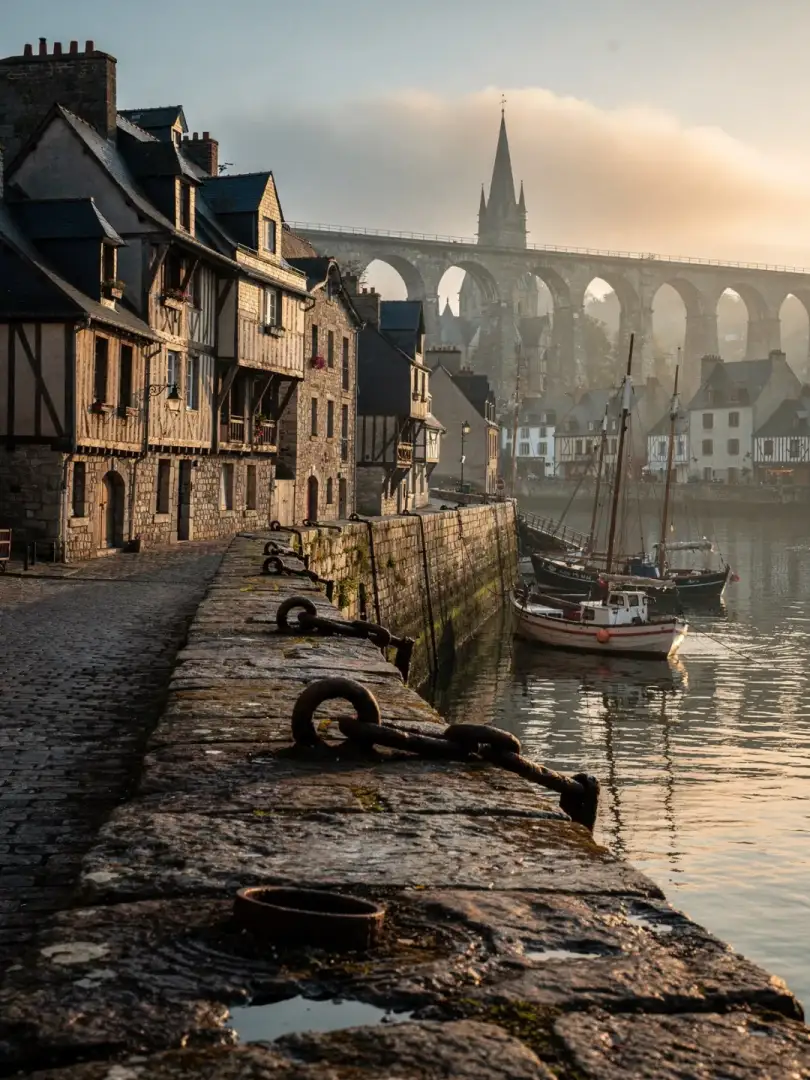
The fresh start came in 1985 in Morlaix, with the Brasserie des Deux Rivières, which became known under the name Coreff. Jean-François Malgorn and Christian Blanchard, two former employees of Crédit Mutuel de Bretagne, had seen in England, under brewmaster Peter Austin, how a small brewery operates. Coreff is considered Brittany's first microbrewery, and the word is Breton for cervoise, an old term for beer. Until January 2005 the brewery was based in Morlaix; since then it has been located in Carhaix, in Finistère.
Four years after Coreff, Bernard Lancelot founded his own brewery. He had been a nuclear engineer and afterward a beekeeper near Paimpont, and he wanted to create something tied to Brittany's history and culture. Since 1999, Brasserie Lancelot has been brewing at Roc-Saint-André in Val d'Oust, in the Morbihan department.
Riding the wake of these two pioneers, the scene grew quickly. For 2016, around 95 Breton breweries were counted; more recent surveys cite more than 250. The numbers vary depending on how they're counted. There is no EU geographical protection for Breton beer.