Granite and Schist
Water & Soil
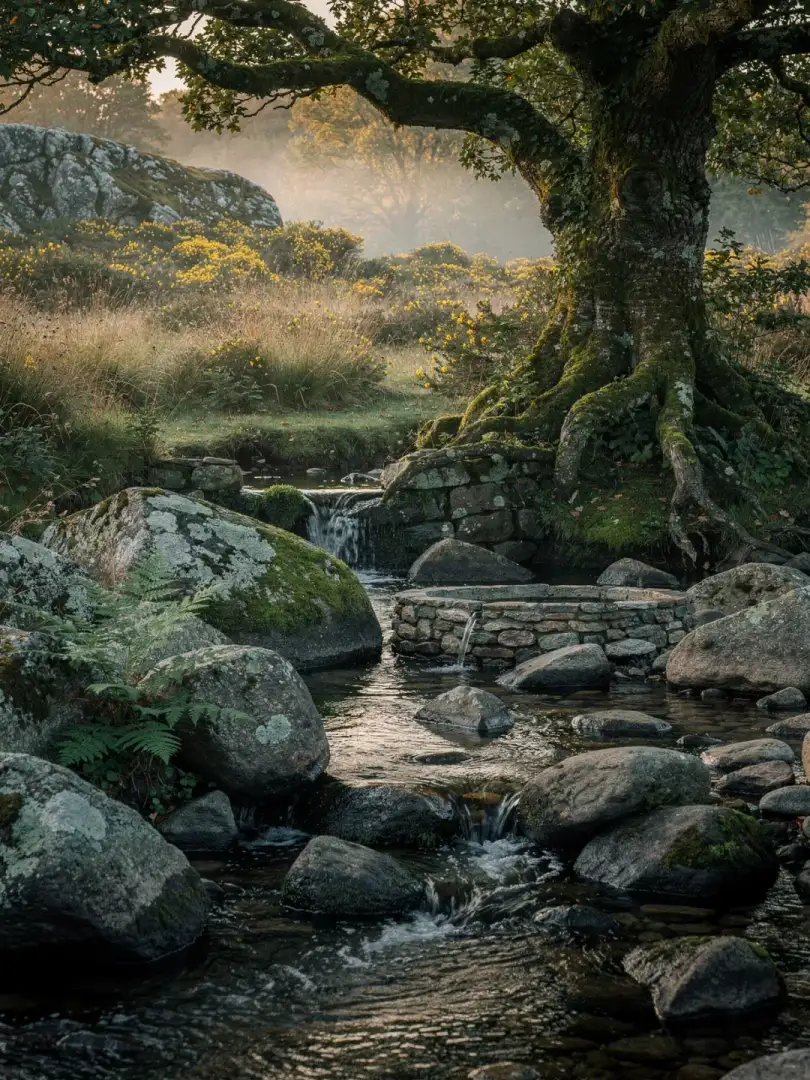
Is the water in Brittany hard or soft? The peninsula sits on the Armorican Massif, an ancient bedrock of granite and schist. These rocks release almost no lime, which is why the local spring water is considered soft. That's the opposite of limestone regions, where monastic brewers like to boast about their springs.
For the brewer, soft water has consequences. It carries little carbonate, a substance that buffers the acidity of the mash and affects dark and pale beers differently. Soft water is easier to steer: use dark malts and you naturally get a fitting acidity, while the hop bitterness comes across rounder rather than sharp.
Exact hardness levels depend on the particular location and well, and each brewery keeps its own figures. As a general rule: water from this ancient bedrock is low in minerals, and the flavor of the beers comes more from the malt and other ingredients than from the rock itself.
The climate plays its part too. The Atlantic keeps winters mild and damp, with frost usually brief. A top-fermented beer like Coreff's ales doesn't need a cold cellar anyway—it matures at moderate coolness. Unlike in Franconia or Bohemia, there are no deep rock cellars here where beer ages for months.
The two best-known breweries are both inland. Carhaix, where Coreff has brewed since 2005, is a small town in the heart of Finistère, while Brasserie Lancelot sits inland in Morbihan on the site of a former mine.