Rhine Plain and Vosges
Water & Soil
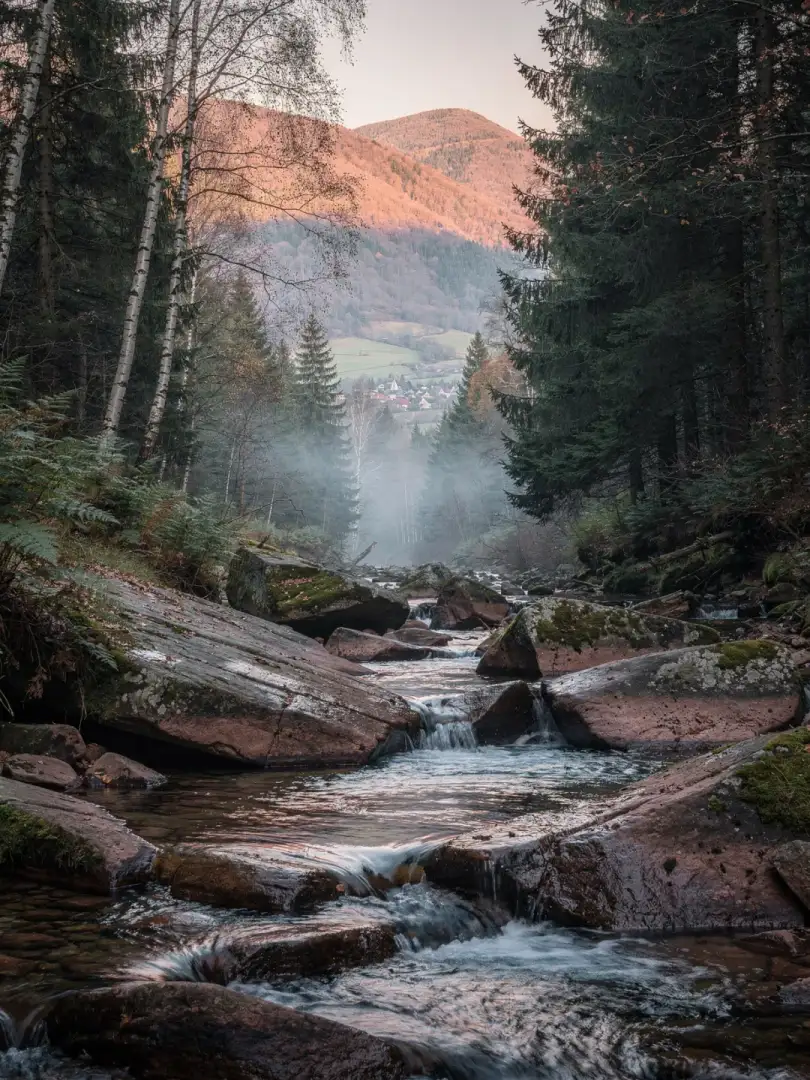
Where does Alsace's brewing water come from? The region lies in a rift valley between the Vosges to the west and the Rhine to the east. Streams flow down from the Vosges into the Ill, which runs through Strasbourg, and beneath the Rhine plain lies a large groundwater reservoir.
The bedrock of the Vosges is mostly reddish sandstone in the north and granite in the south. Water running over it picks up few minerals and stays mostly soft. That's a favorable starting point for a pale lager, since few salts mask the delicate hop aroma. How hard the water at any individual brewery actually is depends on the well.
Water also shaped brewing locations in another way. Flooding from the Ill forced the Hatt brewery to relocate to the higher ground of Cronenbourg in 1850. Anyone storing beer in cellars needs dry walls, and a cellar where the river rises isn't fit for that purpose.
Lager gets its name from lagering: after fermentation, it matures for several weeks at just a few degrees above freezing. Before refrigeration machinery existed, deep cellars and ice made this possible, and both were among the reasons brewers chose their sites carefully.
Today almost all breweries treat their water. They soften it, remove salts, or add them deliberately. This applies as much to the large facilities in Obernai as to the breweries in Schiltigheim. As a result, terroir shapes Alsace beer less than it once did. Its influence lives on mainly through the hops grown in the fields around Strasbourg.