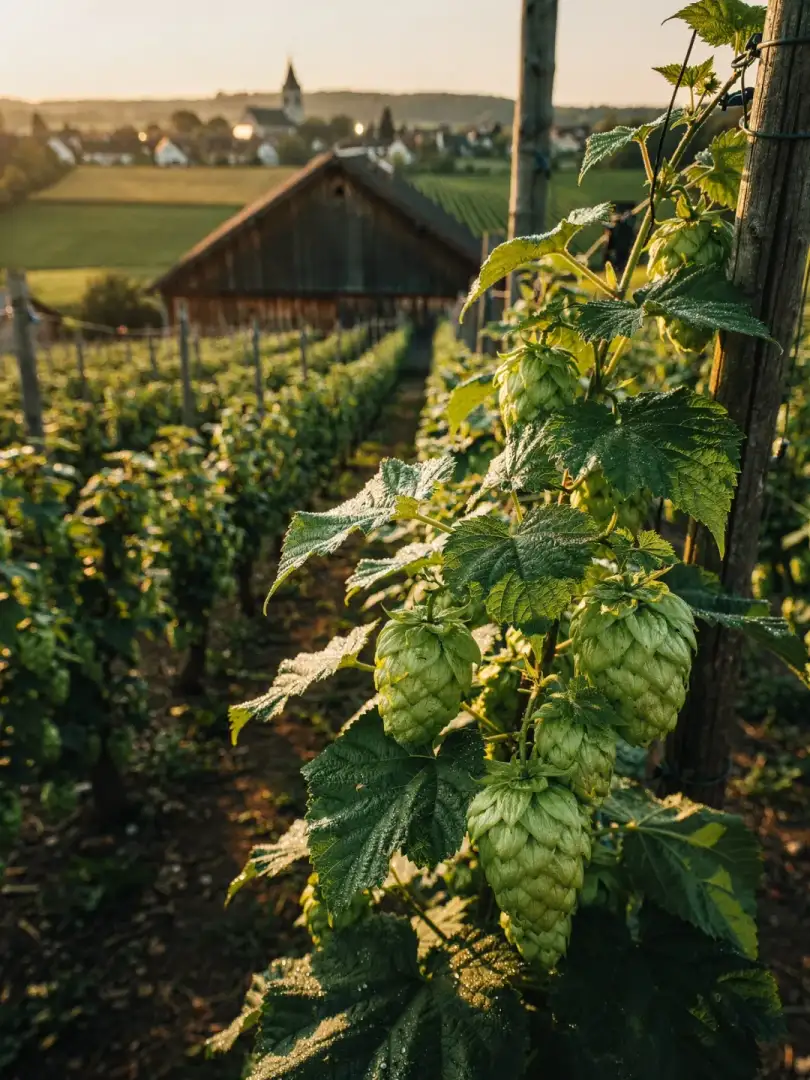
A Vanished Crop
Hops
Hops make beer shelf-stable and bitter. The cones of this climbing plant supply bittering compounds that balance the sweetness of the malt, along with oils that carry herbal, floral or citrus aromas. Hop early in the boil for bitterness, hop late for aroma.
Hops used to be grown locally in Lorraine. The Maison de la Polyculture in Lucey features a permanent exhibition on the region's hop cultivation, which ended in 1971, including a reconstructed hop barn.
Anyone brewing in Lorraine today therefore buys hops from elsewhere. The nearest French growing region is Alsace, while the major hop-growing areas lie in Germany and the Czech Republic, such as the Hallertau and Žatec.
At the brewery museum in Saint-Nicolas-de-Port, hops even get their own dedicated room. There you can see how cones were dried, stored and weighed before going into the boil.
The amount of hops used distinguishes one beer style from another. Pale lagers tend to be lightly hopped, with low bitterness and a mild spiciness in the finish. If you're looking for an assertively hopped beer, you won't find it in this style—look instead to pale ales and IPAs.
Hops also need to be fresh, since their oils dissipate and their bittering compounds oxidize over time. Large breweries like Champigneulles therefore buy pellets or extracts, which keep for a long time. Smaller operations around Nancy also use whole cones when they can get them. The difference shows up in the aroma: fresh cones smell grassier and more vibrant than pellets.