Garde Means Aging
Yeast & Fermentation
With Bière de Garde, the yeast question is unusually open. The style can be top-fermented or bottom-fermented. Top-fermented means the yeast works at warmer temperatures and rises to the top; bottom-fermented means it works in the cold and sinks to the bottom. Most brewers in the north use ale yeast and ferment warm, though some turn to lager yeast.
The old farmhouse beer was brewed in winter. The low temperatures kept fermentation steady and prevented off-flavors that could easily appear in warmer months. Fermentation thus ran cool, and the finished beer then aged for a long stretch, exactly as the name demands.
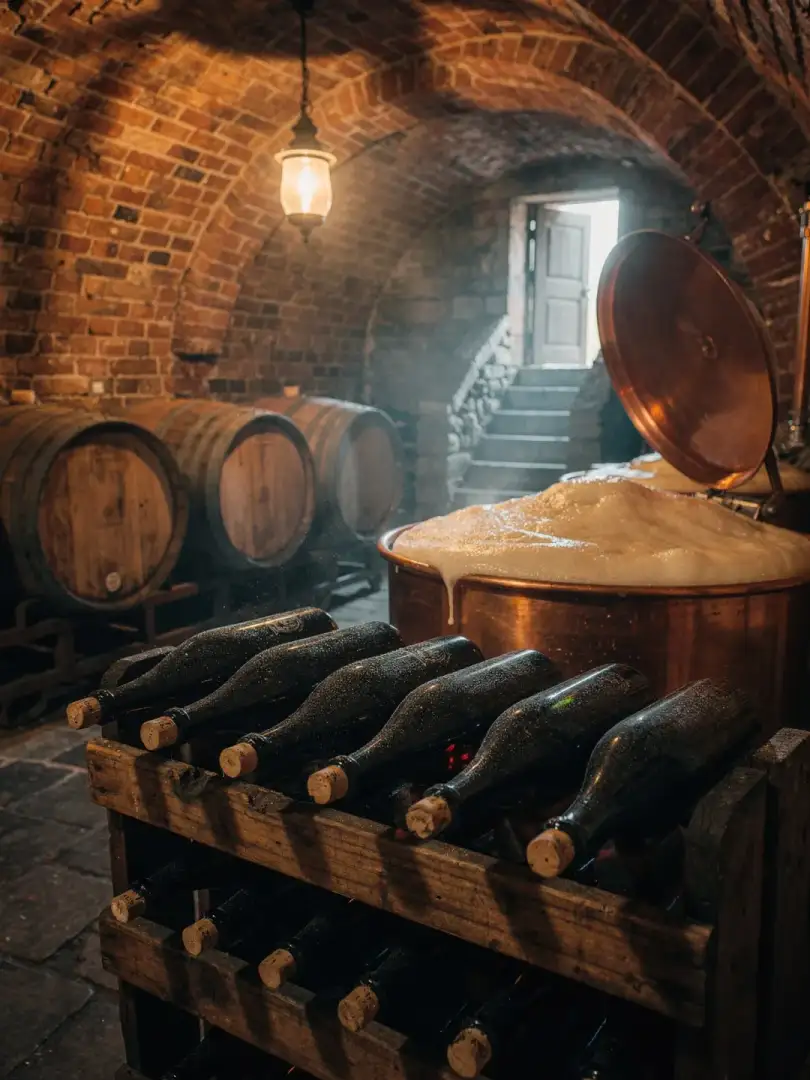
Aging is the defining feature. After primary fermentation, the beer rests for several weeks in the cold so the flavors round out and the yeast settles. Many bottles are sealed with a cork, much like sparkling wine. That fits the large bottles the beer has been filled into since the 1950s.
The Ch'Ti from Brasserie Castelain, a Blonde, is considered top-fermented. The brewery in Bénifontaine near Lens was founded in 1926, and Yves Castelain launched Ch'Ti Blonde in 1979. It helped carry the business through a difficult period and became a face of the north.
At 3 Monts, the brewery itself keeps the tradition alive: work still follows inherited recipes, even though the equipment has been modernized. Through all the change, what the farmhouse brewers knew still holds true. Patience in the cellar is what turns a strong beer into a smooth one.