IPA and Bitter
Beer Styles
What is an IPA, and does it really come from Burton? The abbreviation stands for India Pale Ale, a pale, heavily hopped export beer that was especially successful in India. The term only appears in the early 19th century. Burton upon Trent, through Allsopp and Bass, supplied a large share of these pale beers and made them famous.
The well-known story that someone invented IPA so beer could survive the long sea voyage isn't quite true. Beer had already been shipped to India since 1711. George Hodgson of the Bow Brewery supplied the East India Company with pale 'October beer,' but he didn't invent a new style. Troops in India also drank porter well into the late 19th century.
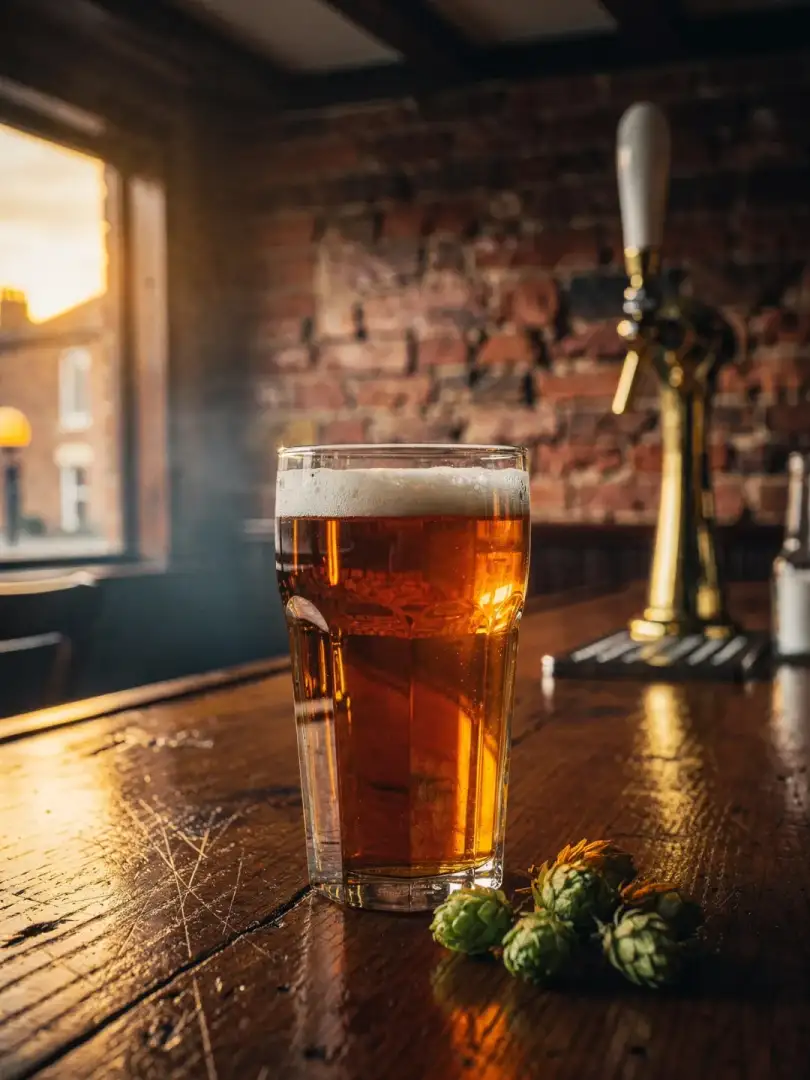
What does an English IPA taste like? It's golden to copper-colored, dry, and distinctly bitter, but with a malt body that provides balance. Unlike its American counterpart, it smells of earth, marmalade, and herbs rather than citrus. Bitterness ranges from 40 to 60 IBU, and alcohol content from 5 to 7.5 percent.
Burton's second classic is lighter. A Best Bitter is a copper-colored, dry cask beer with around 4 percent alcohol. It's less intense than an IPA but built along similar lines. The name 'bitter' can mislead newcomers, since the beer actually tastes malty, with caramel, nut, and a bracing finish.
The difference from its neighboring style lies in strength and hopping. An IPA has a higher original gravity — more dissolved solids in the wort before fermentation — and thus more alcohol. A bitter is the everyday companion at the bar, while an IPA is more of an occasion beer. Both ferment top-fermenting, and both can be sharpened with Burton water.
English IPAtop-fermented
- Original gravity
- 12.4–17.1 °P
- Alcohol
- 5–7.5 % vol
- Bitterness
- 40–60 IBU
- Colour
- 12–28 EBC
Gold to copper, dry, distinctly bitter, with earthy hop character over a solid malt backbone.