Gypsum in the sandstone
Water & Soil
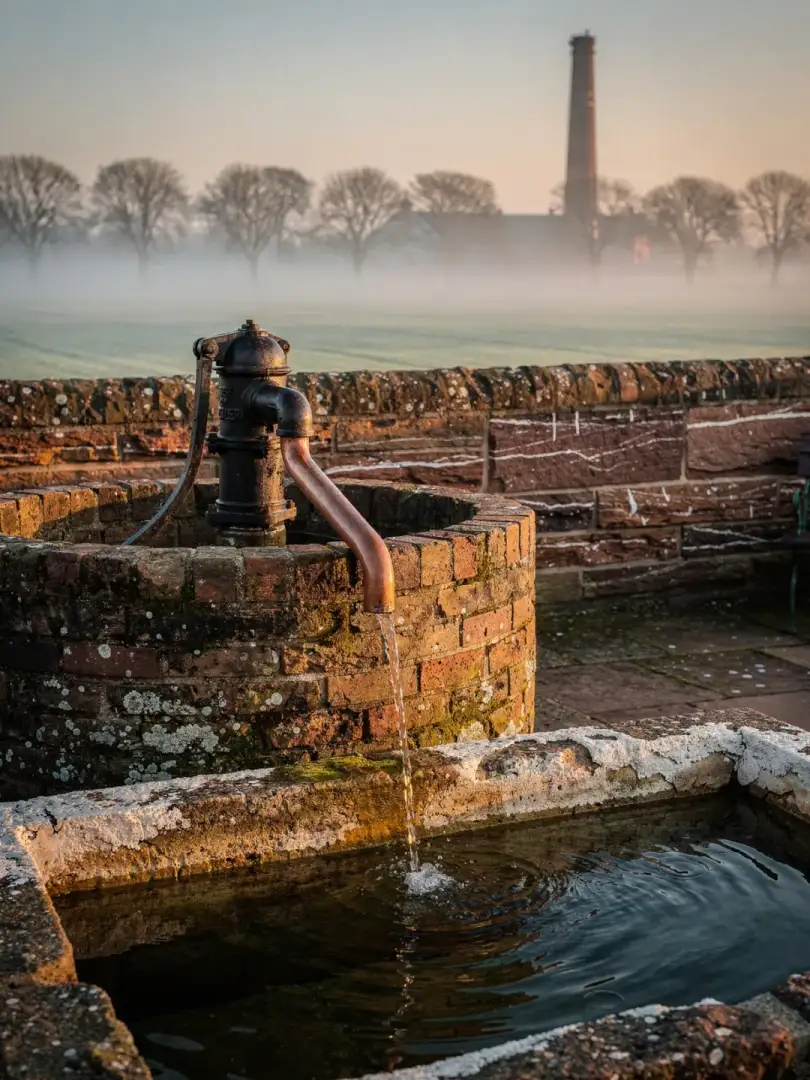
The water beneath Burton is unusually hard, and that's exactly what made the town the center of Pale Ale. Gypsum, a soft sulfate mineral, lies in the sandstone underground, and the town's wells draw it up in dissolved form. Chemically, it's calcium sulfate, and Burton water carries plenty of it.
In the 19th century, the chemist C. W. Vincent recognized that this sulfate makes hop bitterness taste sharper and drier. The beer comes across clearer and more bracing without any extra hops in the kettle. Many exact figures circulate, but they come from different analyses and often contradict each other, so we'll stick to the basic principle here: very hard water, rich in sulfate and gypsum.
This comes with a smell the British call Burton snatch — a brief whiff of sulfur over the glass, a bit like a freshly struck match. Some people like it, others find it off-putting. It's a sign that sulfate was present in the water, and it fades within a few minutes.
You don't have to live in Burton to brew a beer in the Burton style. Burtonisation means adding gypsum to the brewing water so the hops stand out more sharply. Breweries around the world do this for pale ales.
Nowadays almost every brewery treats its water. They soften it or add salts until it suits the desired style. The saying 'the water makes the style' therefore describes Burton upon Trent's past more than its present. Still, it explains why the town had a head start in the 19th century that brewers elsewhere only caught up to with chemistry.