Pale English malt
Malt & Grain
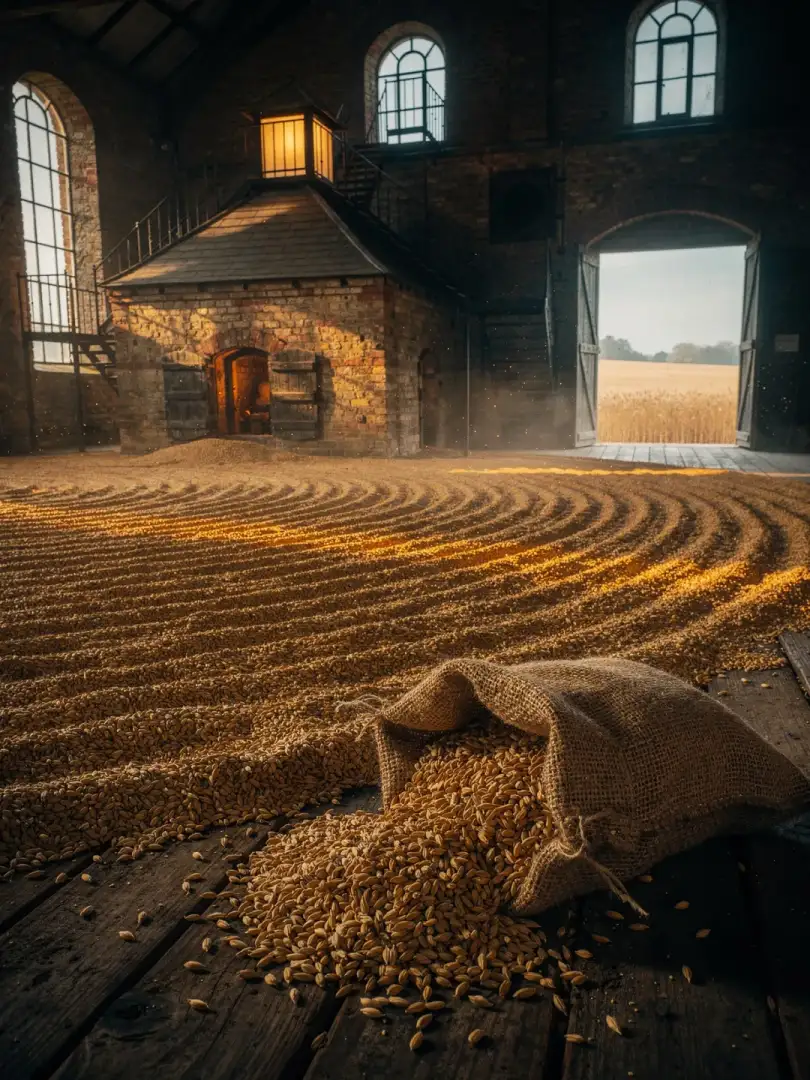
A Burton Pale Ale begins with barley. Maltsters let the grains germinate, halt the process with heat, and dry them in a kiln, a heated oven. This malt supplies the sugar the yeast later ferments. The gentler the kilning, the paler the malt stays.
The classic among English varieties is Maris Otter. This winter barley was bred in 1965/66 at the Plant Breeding Institute in Cambridge. Many brewers still consider it the standard for British ales today, thanks to its round, slightly bready aroma.
How pale a beer turns out also depends on the heat source. According to the common account, kilning over coke instead of wood fire made a pale malt without smoky flavor possible. This laid the foundation for the Pale Ale that gave the town its reputation. The dark malt used by London's porter brewers, by contrast, tasted of roasting.
Brewing in the English tradition typically uses a base malt supplemented with small amounts of caramel malt. Caramel malt is malt that's heated while still moist, causing the sugar inside the grain to solidify. It gives the beer an amber color and a light sweetness that balances the sharp bitterness.
In England, top-fermented beer may also be brewed with sugar, unlike under the German Reinheitsgebot in Bavaria. For a Burton ale this doesn't matter much, since malt is meant to take the lead here. In Bass and Marston's beers, barley malt remains the foundation, and the water sharpens the rest.