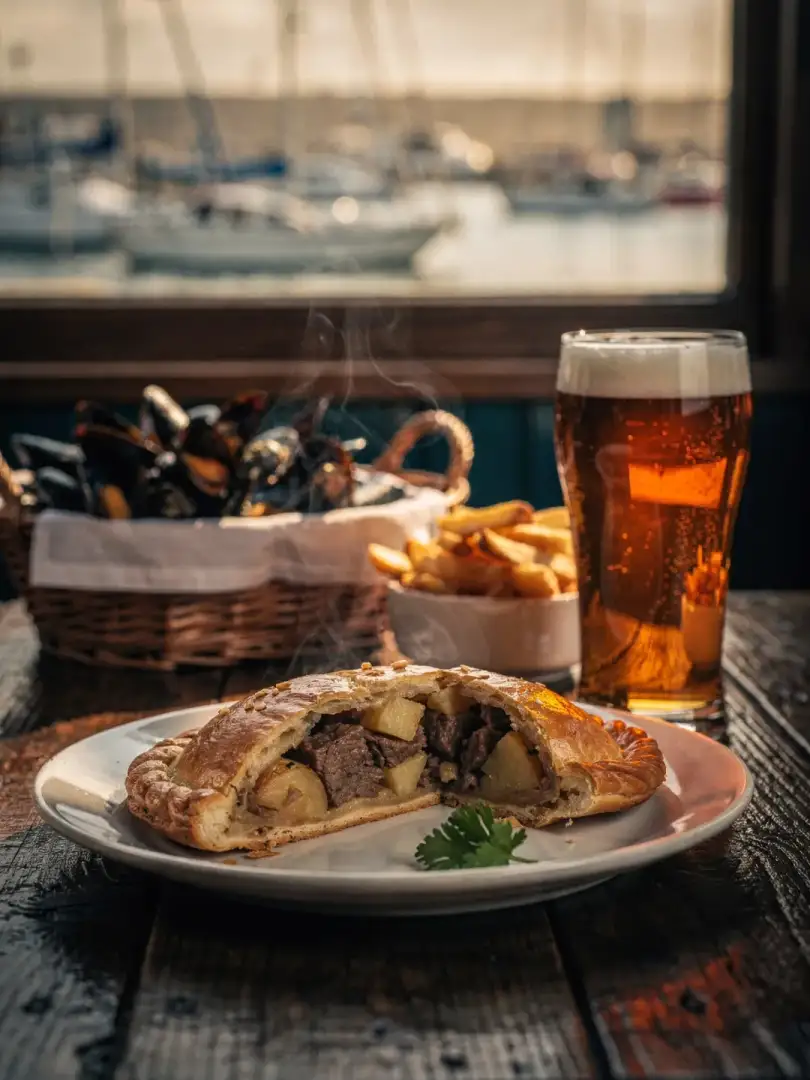
Pasty and Pub
Food & Beer Culture
What goes into a Cornish Pasty? Under the EU's PGI designation rules: beef, potato, swede (what's called a rutabaga in the US), and onion, seasoned with salt and pepper. The pastry is folded into a D-shape and crimped along one side, not on top, then baked. Filling must take place in Cornwall.
The pasty was traditionally the food of miners working in the tin and copper mines. According to legend, the crimped edge served as a handle for dirty hands and wasn't meant to be eaten. Whether that's actually true isn't documented.
It pairs well with beer because the malt in the Bitter complements the pastry crust, while the mild bitterness balances the richness of the meat. Fish and chips, mussels, and crab from the coast also have their place in the region's pubs. Fried fish works well with light bitterness, and the malt picks up the roasted notes of the batter.
Alongside beer, cider belongs to the Southwest too. It's pressed from apples, mainly in Somerset and Devon. The rough, cloudy varieties are known as scrumpy. Cider isn't a beer but an apple wine, yet many pubs serve both.
In the pub, you order at the bar, not at the table, and pay right away. You order a pint or a half. A Best Bitter at just over four percent is meant for a long evening, not for drinking quickly. In summer, locals in the coastal towns like to stand with their glass by the harbor's edge.