Granite and Rain
Water & Soil
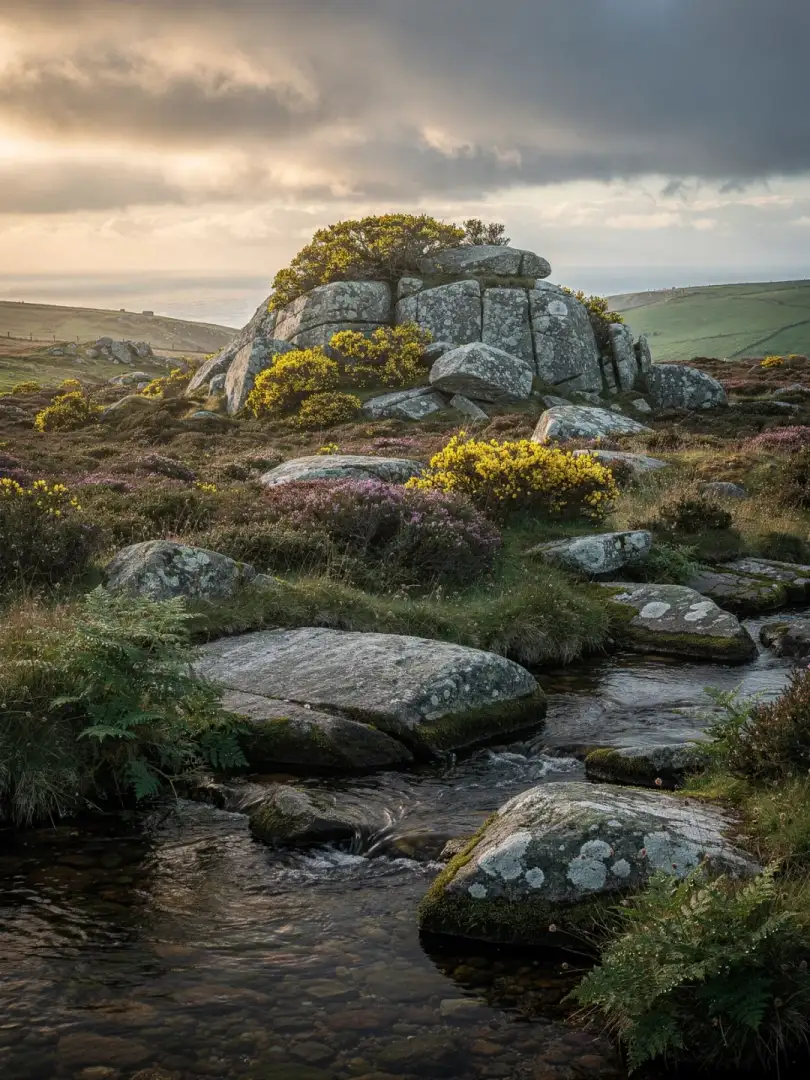
Cornwall largely consists of granite, with granite domes lying under a thin layer of soil across Bodmin Moor and around St Austell. Rainwater seeping through such rock picks up hardly any minerals and is therefore considered soft. Add to that the kaolin pits near St Austell, where the decomposed granite was mined. Reliable hardness figures for individual breweries aren't available, so this remains a rule of thumb.
Soft water doesn't automatically make an ale mild. A beer's bitterness feels rounder with few minerals, while with plenty of sulphate, as in the famous Burton water, it comes across noticeably drier and sharper. The Southwest lacks this gypsum-rich water, leaving plenty of room for malt and hop aroma to shine.
As is the case almost everywhere now, brewers no longer use water straight from the ground. Breweries treat it, stripping out minerals or adding salts as needed. Still, the landscape leaves its mark: salt air, wind and plenty of rain are part of daily life for brewers and publicans alike. Brewing by the sea means working with different weather than inland, even if little of that reaches the glass.
Climate matters for storage too. Cask ale matures in the pub cellar at a cool but not ice-cold temperature. In Cornwall, with its mild, damp weather, the cellar usually stays at a fairly even temperature—an advantage for a beer that's drunk fresh from the cask and needs no fridge.