Barley for Ale
Malt & Grain
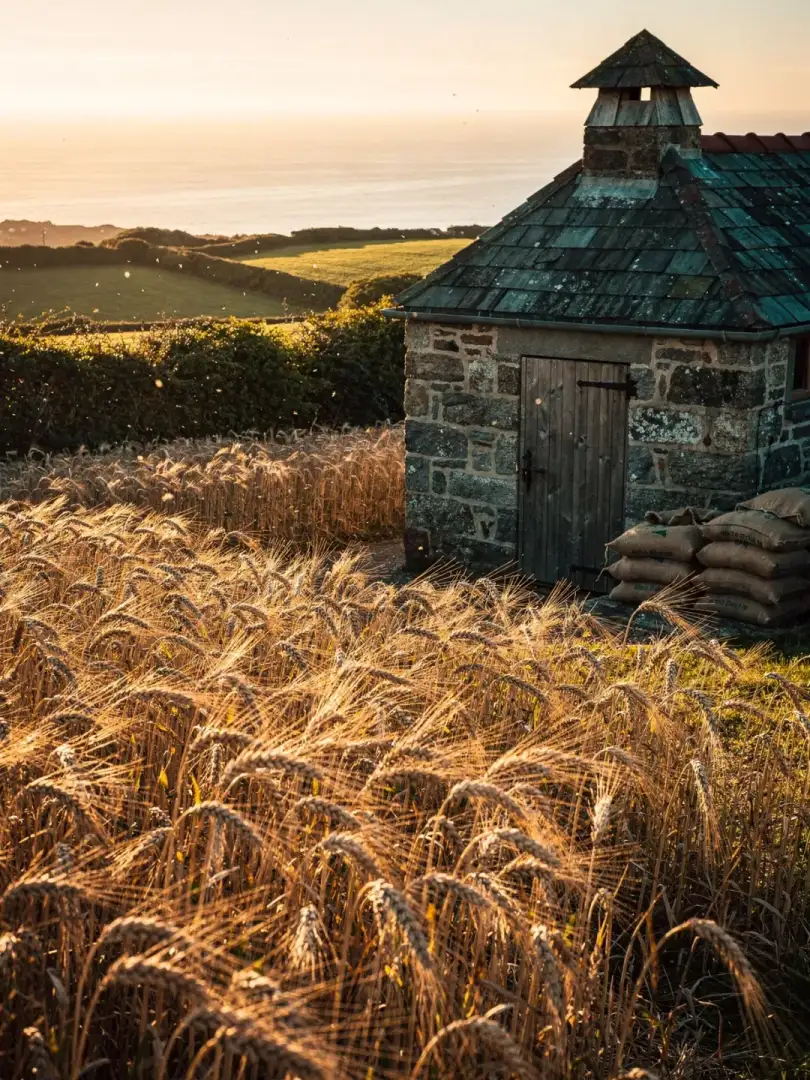
What kind of barley is English cask ale brewed from? Mostly winter barley, and one variety defines the whole style: Maris Otter. Bred in 1965 and 1966 at the Plant Breeding Institute in Cambridge, it remains the classic choice for British ales to this day. It brings plenty of malt character and a soft, bready sweetness that suits a bitter as naturally as pastry suits a pasty.
For bitter and pale ale, the barley is kilned into pale to golden-brown malt. Kilning means drying the germinated grain in an oven; the higher the heat, the darker and more toasty the malt becomes. The result tastes of toast, biscuit and a touch of caramel, rather than smoke or coffee.
Often a portion of caramel malt is added too. It's roasted while still moist and provides sweetness, colour and a fuller body. You can see this in the glass, in the amber-to-copper hue typical of a best bitter.
Unlike in Bavaria, England has no purity law for beer. Brewers are free to add sugar or other grains. Even so, many ales from the Southwest manage without such additions.
The Southwest doesn't have its own barley-growing landscape like eastern England does; the soil and climate here are simply too wet and too cool. The malt therefore comes from maltings outside the region and is delivered to the brewery in sacks or silo trucks. As a result, the flavour of these beers depends more on recipe, yeast and cellar care than on anything grown right on the doorstep. That's as true for Doom Bar as it is for Tribute.