Maris Otter
Malt & Grain
Maris Otter is England's most famous malting barley, and its origins lie in East Anglia. It was bred in 1965 at the Plant Breeding Institute in Cambridge and released to farmers in 1966. It's a winter barley: sown in autumn, it's already green before winter sets in. The name comes from Maris Lane, which runs past the Institute in Trumpington.
Two older Institute varieties, Proctor and Pioneer, are its parents. Maris Otter was bred specifically for cask ale. Brewers praised its low protein content, its even growth during malting, and its strong enzymes, which convert starch into sugar during mashing.
After that, things got complicated. New varieties brought higher yields, the big brewers turned away, and in 1989 Maris Otter was removed from the UK's official variety list. Two grain merchants, Banham and Robin Appel, bought the sole marketing rights in 1992, and in 2002 acquired all rights along with the brand. That's how the variety stayed available to brewers.
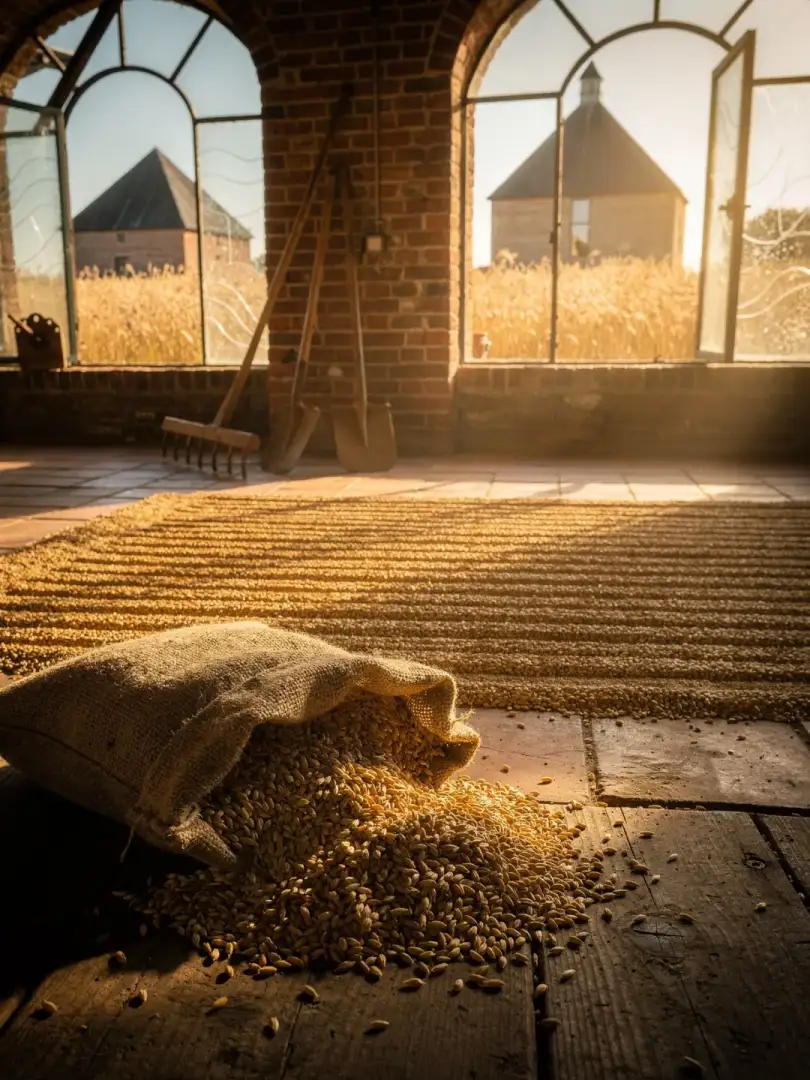
Malting still happens in the region today. Crisp Malting in Great Ryburgh, Norfolk, still runs floor malting, according to the company: the barley germinates in thick layers on the floor and is turned by hand. Muntons in Stowmarket, Suffolk, supplies malt on a large scale.
Kilning, the oven-drying stage, requires little heat. The malt stays pale and tastes of biscuit and nuts. Brewers usually add small amounts of caramel malt to give the beer an amber hue and a touch of sweetness.