Bitter, Strong Bitter
Beer Styles
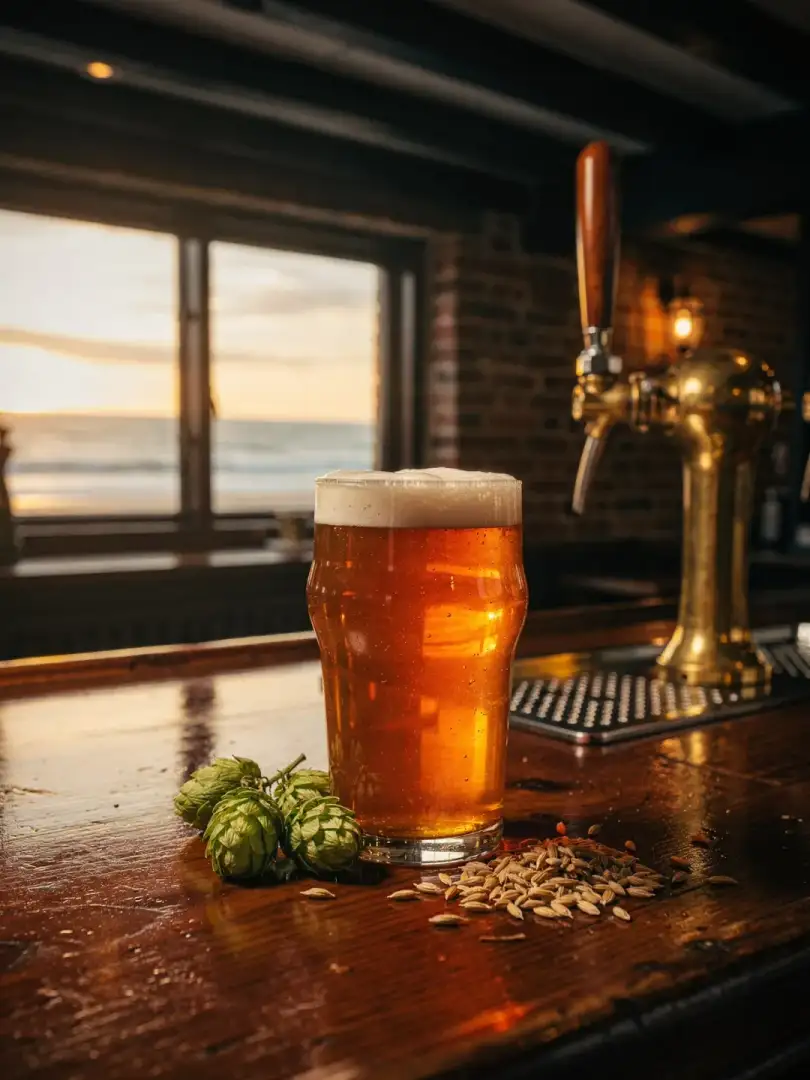
What's the difference between Bitter and Pale Ale? Often just the name on the label. The same beer is called Bitter on cask in the pub and Pale Ale from the bottle, and both are pale to copper-colored, top-fermenting English ales. In East Anglia, Bitter is the everyday style.
According to BJCP, Best Bitter comes in at 3.8 to 4.6 percent ABV and 25 to 40 IBU. An East Anglian example tastes of biscuit, orange marmalade and a hint of earth, with a dry finish. It's a beer for drinking, not for marveling at, and that's exactly its appeal.
Strong Bitter goes further. According to BJCP it ranges from 4.6 to 6.2 percent ABV at 30 to 50 IBU, and is more robust in both malt and hops. Greene King's Abbot Ale sits in this territory, with bread crust, dried fruit and honey on the palate.
Two mix-ups come up often. A Strong Bitter is not a Barley Wine, which according to BJCP sits at 8 to 12 percent ABV and tastes sweet and heavy. Nor is it a Porter, since its color comes from caramel malt rather than roasted malt.
The closeness to barley shapes the flavor of these beers. Malt takes center stage while the hops merely accompany it, and that's precisely what sets an East Anglian Bitter apart from a heavily hopped English IPA, which according to BJCP reaches 40 to 60 IBU.
Bitter remains the style by which you'll recognize East Anglia fastest in the glass. It's light enough for several pints over an evening, yet robust enough to taste unmistakably of barley.
Best Bittertop-fermented
- Original gravity
- 10–11.9 °P
- Alcohol
- 3.8–4.6 % vol
- Bitterness
- 25–40 IBU
- Colour
- 16–32 EBC
Amber, biscuit and orange marmalade, dry finish.