Kräusen, Cask, Isinglass
Yeast & Fermentation
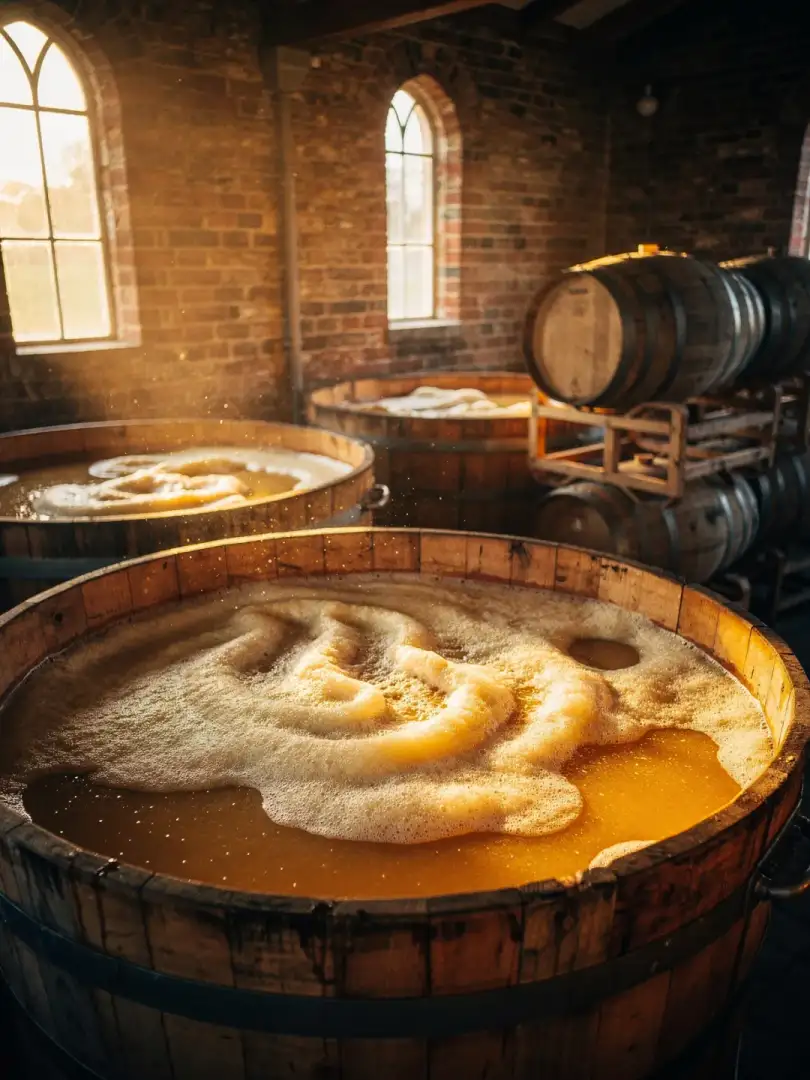
In the fermentation vessel of an East Anglian brewery, the foam rises high in the first hours. The yeast is top-fermenting, working warm and gathering at the surface, where it forms a thick cap of kräusen. The warmth produces fruity aromas you'll recognize in the glass as pear, orange or marmalade.
Fermentation usually happens at around 18 to 22 degrees Celsius and lasts just a few days. By then most of the sugar is used up, and the young beer sits at around four percent alcohol. Greene King, Adnams and Woodforde's all rely on this method, known as ale fermentation.
The beer isn't finished yet, though. It's filled into the cask that will later sit in the pub cellar, where it continues to ferment quietly. This cask ale is alive: it keeps developing after filling and has only a few days to reach its best moment.
To clear the beer, the brewer often adds isinglass to the cask, a fining agent made from fish swim bladders. It binds the yeast, which then settles at the bottom of the cask. The beer turns bright without being filtered. Anyone drinking vegan should check for notes on how the beer was fined.
How long does a cask last? Once tapped, or opened, the beer stays fresh for only a few days, since air gets in and it turns. That's why publicans order small quantities and let the cask rest beforehand to let the yeast settle.
Alcohol-free is possible too. Adnams launched a dealcoholization plant in 2018, which gave rise to Ghost Ship at 0.5 percent. The process removes alcohol from the finished beer without losing the flavor entirely.