The Charmed Circle
Water & Soil
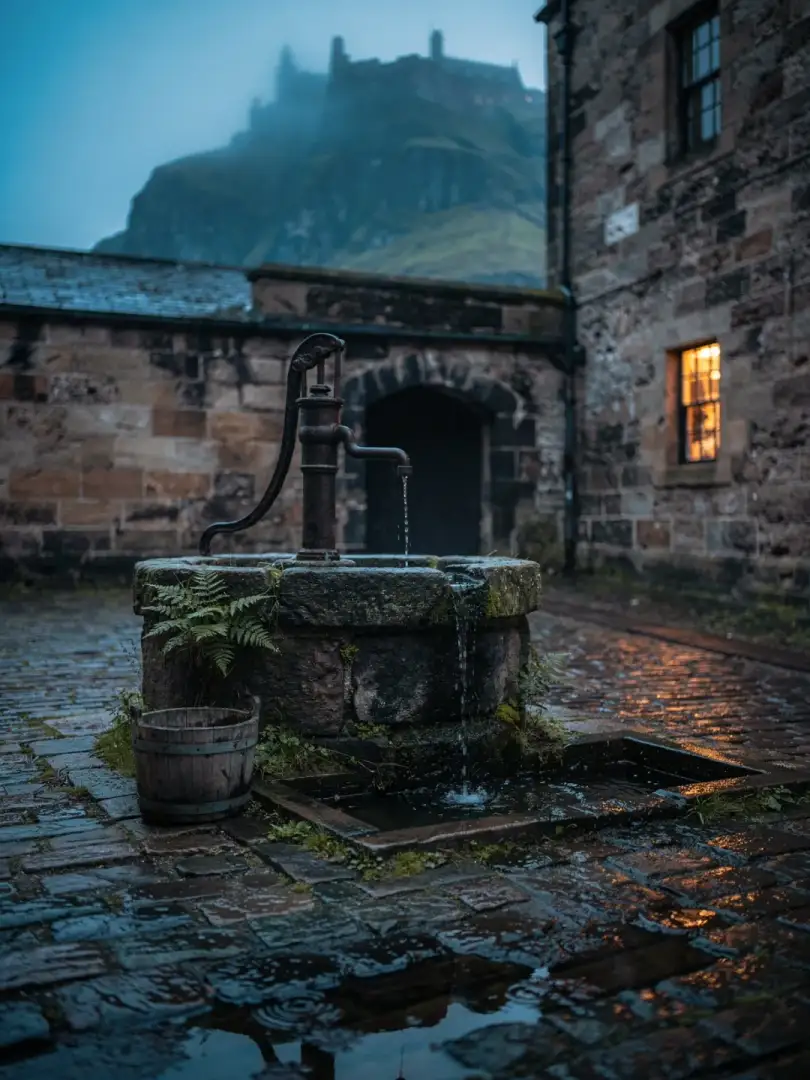
What kind of water does a Scottish ale need? Edinburgh gave an early, practical answer: water from its own ground. The monks of Holyrood Abbey dug a well, and later the brewers of the Canongate followed suit. They called the groundwater in the area the "Charmed Circle," because one well after another proved abundant.
The city sits amid hard rock. Castle Rock, with the castle, and Arthur's Seat behind it, are remnants of ancient volcanoes. The well water came from the ground directly beneath the brewing yards. Reliable hardness figures for Edinburgh's water don't exist, so no number is given here.
Still, the chemistry is quickly explained. Carbonate in water, the hardness also known from limescale in a kettle, suits dark malts and softens their acidity. Sulphate, by contrast, emphasizes hop bitterness and makes beer drier. An ale with plenty of caramel malt and little hop, like Edinburgh's 80/-, doesn't need much of either.
Today, almost all breweries treat their water, softening it or adding salts as needed. Stewart Brewing, located south of the city on the edge of the Pentland Hills, can likewise adjust its water. So while water shaped the Edinburgh style historically, today it appears less on the label than in the tradition.
Climate plays its part too. The city sits on the Firth of Forth, a sea inlet off the North Sea, with cool summers and frequent coastal fog the Scots call "haar." A beer meant to be neither hot nor heavy finds good conditions here.