Barley for Ale
Malt & Grain
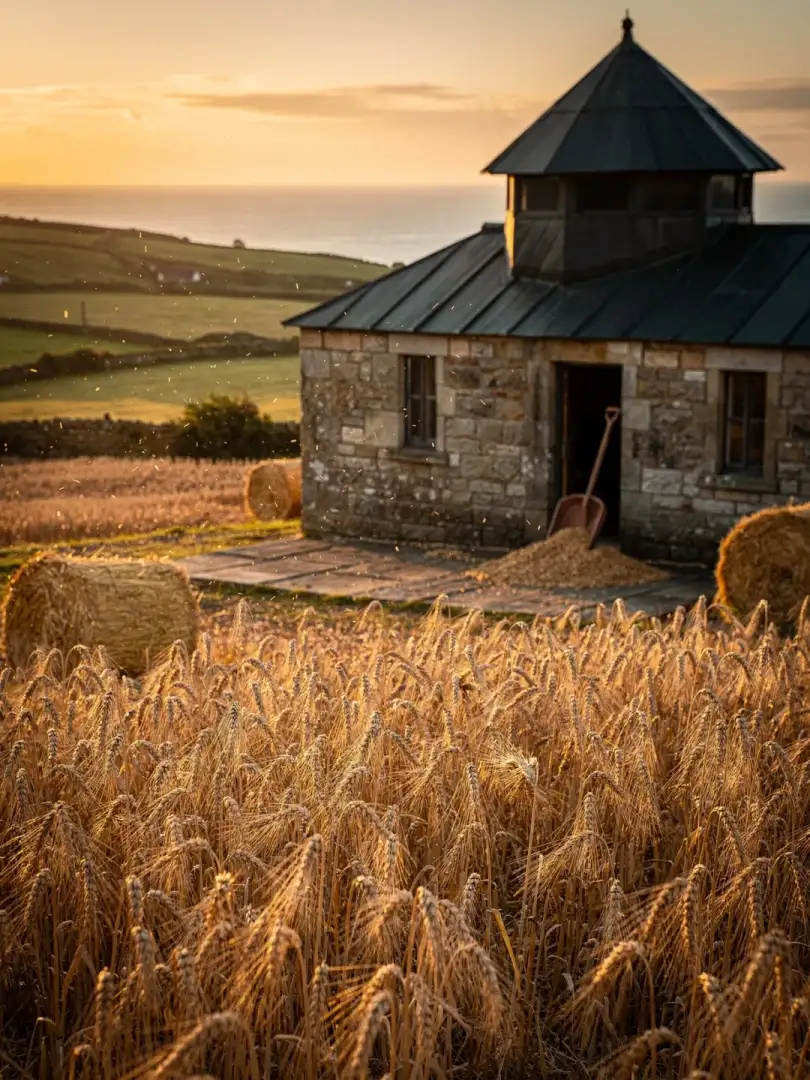
Malt makes an Edinburgh ale. Barley was abundant in southern Scotland as early as the 19th century, and brewers around the Canongate sourced it from the surrounding countryside. The same barley malted there for whisky could just as well go into a brewer's ale.
Malting means moistening the grains until they germinate, then stopping the sprout with warm air in the kiln. In the process, the grain converts its starch into fermentable sugar. The longer and hotter the kilning, the darker, sweeter and more caramel-like the malt becomes. A Scottish ale uses pale malt as its base, with some darker-roasted barley malt added for colour and a light roasted note.
This is what produces the reddish-brown hues that set an 80/- apart from a pale lager. Smoke, as known from Scotch whisky, is not a hallmark of the ale. Anyone tasting it has likely come across a beer brewed with peated malt, which is the exception. The malt character should stay round and sweetish rather than sharp.
The malt character shows most clearly in the Wee Heavy, a strong ale that, under BJCP beer-judging standards, may reach up to 30 degrees Plato original gravity. Original gravity is the sugar content of the wort before fermentation, and it determines how much alcohol ultimately results. In a Wee Heavy, plenty of residual sugar remains, giving the beer notes of toffee, bread crust and dried fruit.
The brewers in Dunbar and in the city's small operations still work with the same ingredients today, even though Slateford Road stands silent.