Pint, tap, cellar
Tasting
What does a bitter from Herefordshire taste like? In the glass it sits between amber and copper, the head is creamy and not too tall. The first impression is bread and toffee, then an earthy, slightly woody hop character emerges. The finish is dry, not sharp, and a hint of orange peel may linger in the yeast.
Butty Bach from Wye Valley serves as a good example, a golden ale. HPA, a pale ale from the same brewery, also appears frequently in the area. From the Teme Valley Brewery in Worcestershire come beers brewed with regional hops. The beer mentioned here is just a tasting example, not a recommendation.
It's served in the pint, a glass holding 568 milliliters, the British measure for centuries. It comes with a straight wall, a dimple, or a handle. The dimpled wall makes the glass easier to grip. In pubs, the pint is the standard size, with a half being half that.
The temperature for real ale is higher than for pilsner: about 10 to 13 degrees Celsius, as delivered by the cellar. Too cold, and the aromas vanish. Too warm, and the beer turns flat. First-time tasters will notice it doesn't feel ice-cold on the tongue, but comes across as milder.
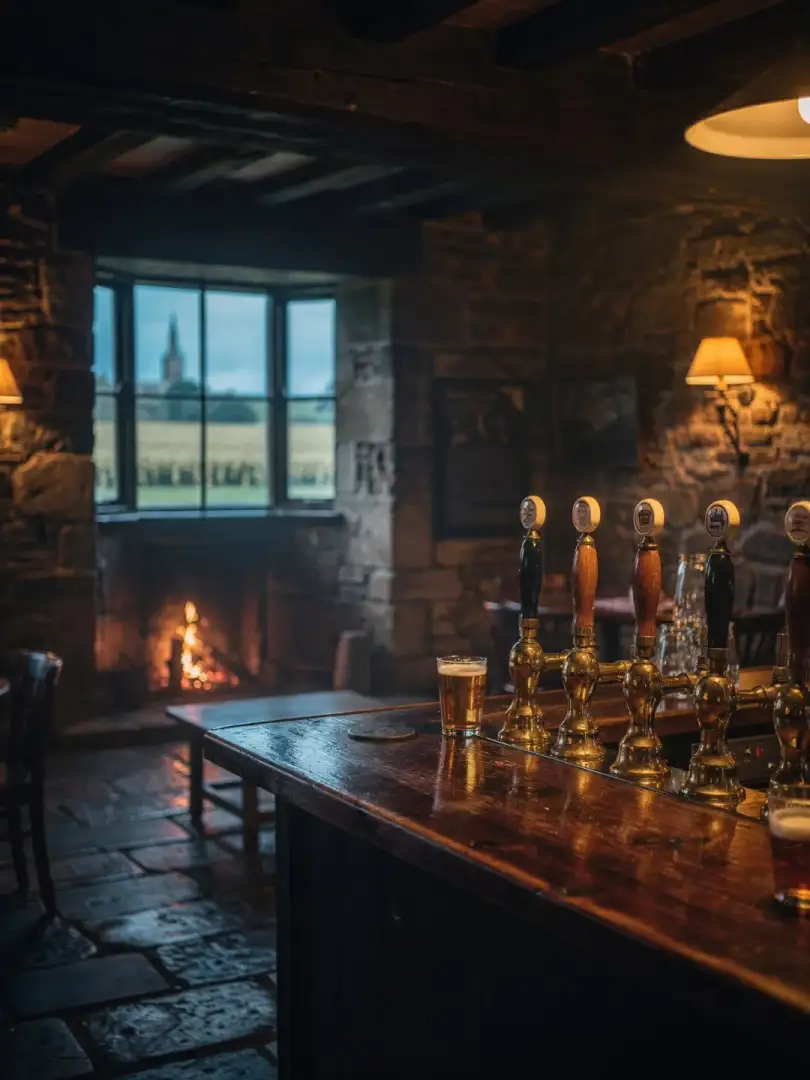
It's served using a hand pump. The publican pulls the lever, and the beer is drawn up from the cellar. The foam forms naturally this way, and some pubs fit a sparkler, a nozzle that makes the foam denser. This is more common in the North of England than in the West Midlands.