Bitter, Golden Ale
Beer Styles
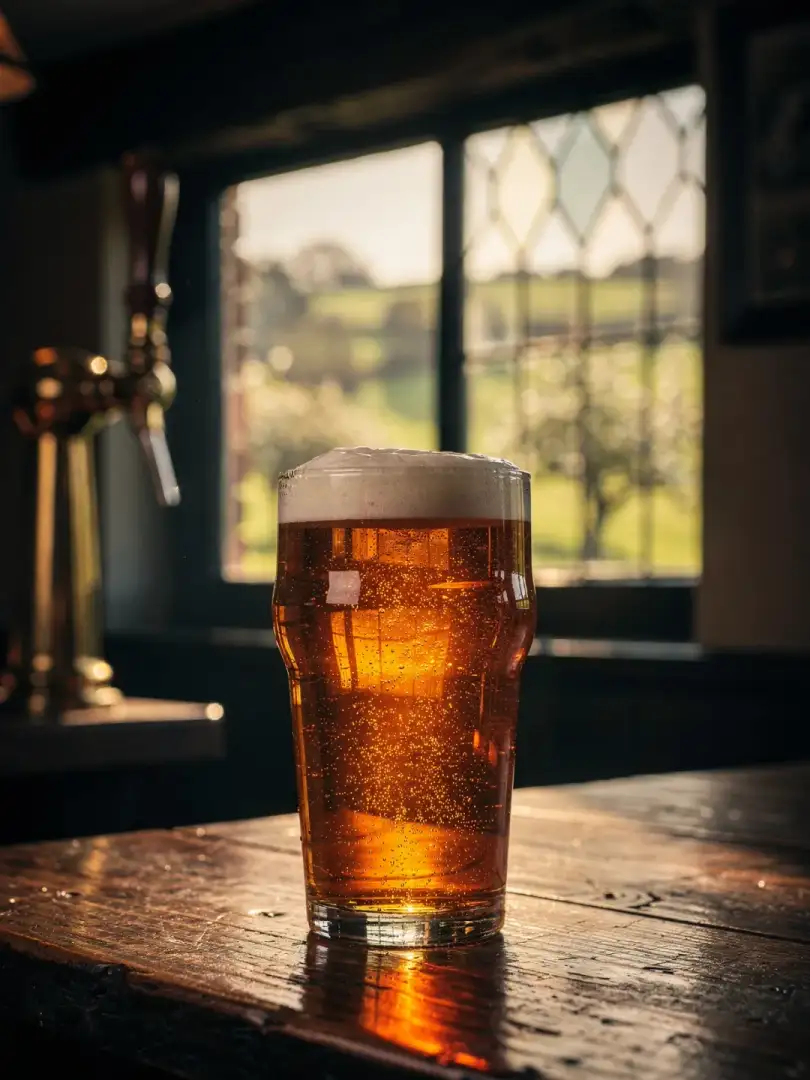
What is a bitter, and why is it called that? Bitter is the classic English pub beer: a top-fermented, copper-colored cask ale with moderate alcohol. The name refers to its more bitter taste compared to the sweeter mild. In the area around Hereford, bitter is the standard.
According to the BJCP guidelines, there's a distinction between Ordinary Bitter, Best Bitter, and Strong Bitter, also called ESB. The difference lies in alcohol and intensity: an Ordinary has 3.2 to 3.8 percent, a Best Bitter 3.8 to 4.6 percent, and a Strong Bitter 4.6 to 6.2 percent. All three have a malt backbone and a dry, hoppy finish.
How does bitter differ from pale ale? The line between the two is blurry. In the pub, lighter and hoppier beers tend to be called golden ale or pale ale. A bitter is usually darker and breadier, and the hops are English-earthy rather than tropical-fruity, as with American varieties.
Besides these, the West Midlands also has mild, which tastes weaker and sweeter, and porter. The Wye Valley brewery in Stoke Lacy brews, among others, a golden ale called Butty Bach. The name comes from Welsh and means roughly "little mate," a nod to the area's closeness to Wales.
Cider and perry are also drinks of Herefordshire and Worcestershire, but they aren't beer. Cider is apple wine, perry is made from pears. Both appear on the menu alongside cask beer in some pubs, and some local breweries sell them next to their beer.
Best Bittertop-fermented
- Original gravity
- 10–11.9 °P
- Alcohol
- 3.8–4.6 % vol
- Bitterness
- 25–40 IBU
- Colour
- 16–32 EBC
Amber to copper, bready malt, earthy hops, dry finish.