Barley, Seaweed, Oats
Malt & Grain
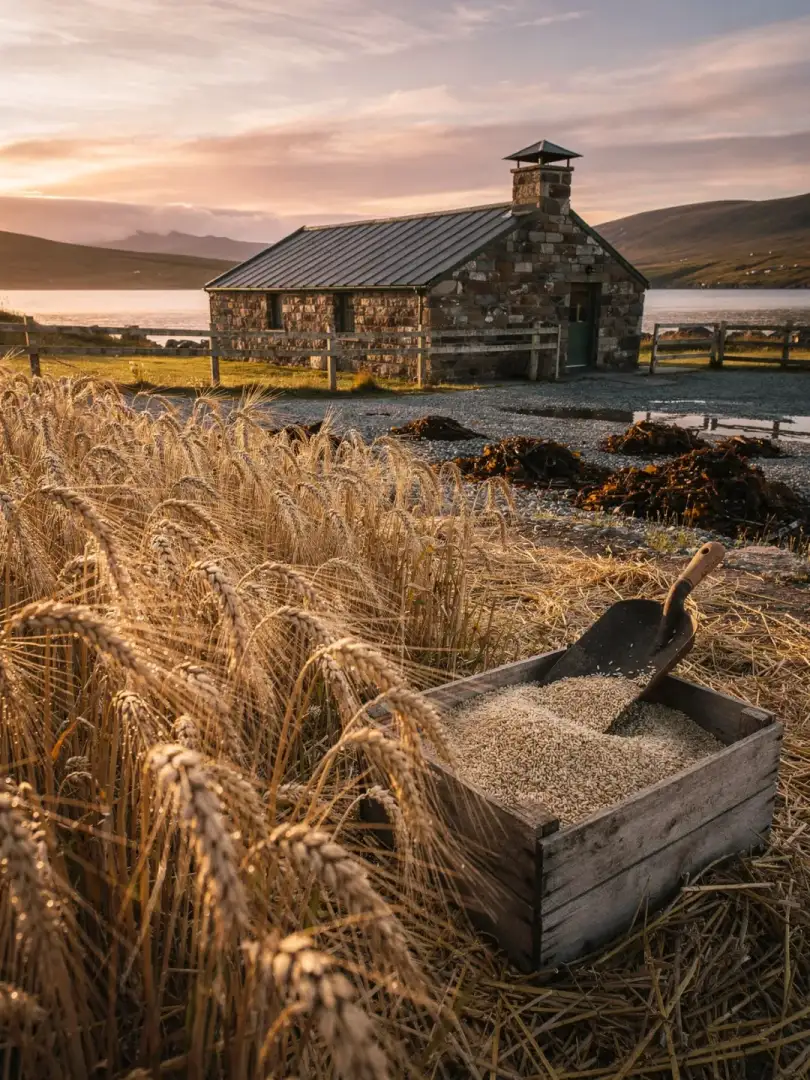
Barley is the grain of the north because it ripens even through short, cool summers. The Hebrides and Orkney also grow Bere, an ancient barley variety considered a landrace. Whether any brewery in the region actually uses it isn't documented, but it shows just how long people here have lived alongside barley.
Malting barley works like this: the grain germinates briefly so it can convert starch into sugar, then it's dried in a kiln. The hotter the kiln, the darker and more roasted the malt. That's why Scottish beers often taste of bread, caramel, and a hint of roast, with little bitterness to counter it.
The region's recipes go well beyond barley. Williams Bros names five historical ales: Fraoch with heather, Grozet, a wheat beer with gooseberries, Ebulum, a black ale with elderberries, Kelpie with seaweed, and Alba with pine shoots. The brewery bases these on old Scottish recipes it has revived.
The seaweed in Kelpie has a backstory: because coastal farmers fertilized their fields with kelp, the barley supposedly took on a taste of the sea. The beer brings that flavor back using fresh seaweed in the mash, and it shows just how closely coast and field are tied together here. The kelp doesn't taste fishy—more salty, with a faint earthiness.
Skye Brewing uses oats and heather honey for its Black Cuillin, while Black Isle works with ingredients from its own organic farm and other organic suppliers. Peat smoke is mainly known from island whisky—in beer, it's the exception.