Peat, Rain, Rock
Water & Soil
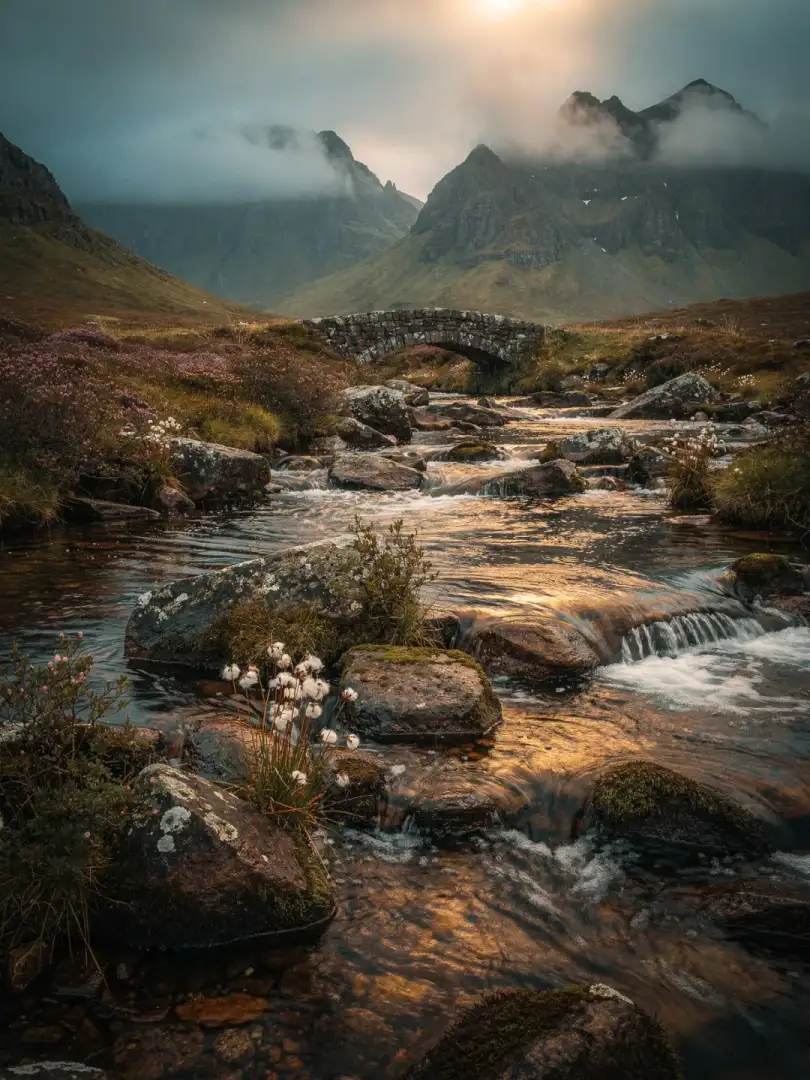
What kind of water goes into the brew kettle in the north of Scotland? Usually something soft and low in minerals, having flowed through the Highlands over granite and peat, sometimes taking on a brownish tint. Precise hardness figures for individual breweries can't be reliably generalized, and nearly every brewery treats its water these days anyway.
Soft water lets malt and hops shine without a sharp mineral edge. That suits beers where roasted malt character and sweetness come first, and less so heavily hopped styles, where brewers often add sulfate. How exactly individual Highland brewers adjust their water, they rarely reveal.
The landscape offers more than water. On Orkney, hardly any trees grow on the sandstone, the wind sweeps unchecked across the fields, and peat once served as fuel. On Skye, rain clouds break against the black peaks of the Cuillins. Standing at the harbor in Uig, where Isle of Skye Brewing has its brewhouse, you see the ferries bringing in everything the island can't produce itself.
On the Black Isle—which isn't actually an island but a fertile peninsula north of Inverness—the brewery sits right on its own organic farm. The brewery says it brews its beer with ingredients from that farm and from other organic suppliers. The climate is cool and damp, and that shapes what grain can grow here.
A cellar carved into rock, as known in Franconia, isn't the norm in the Scottish north. Here, the chill comes from the weather itself: even in summer, the coasts often stay cool, and many brewhouses are small operations set up in old schools, train stations, or farm buildings.