Warm and Alive
Yeast & Fermentation
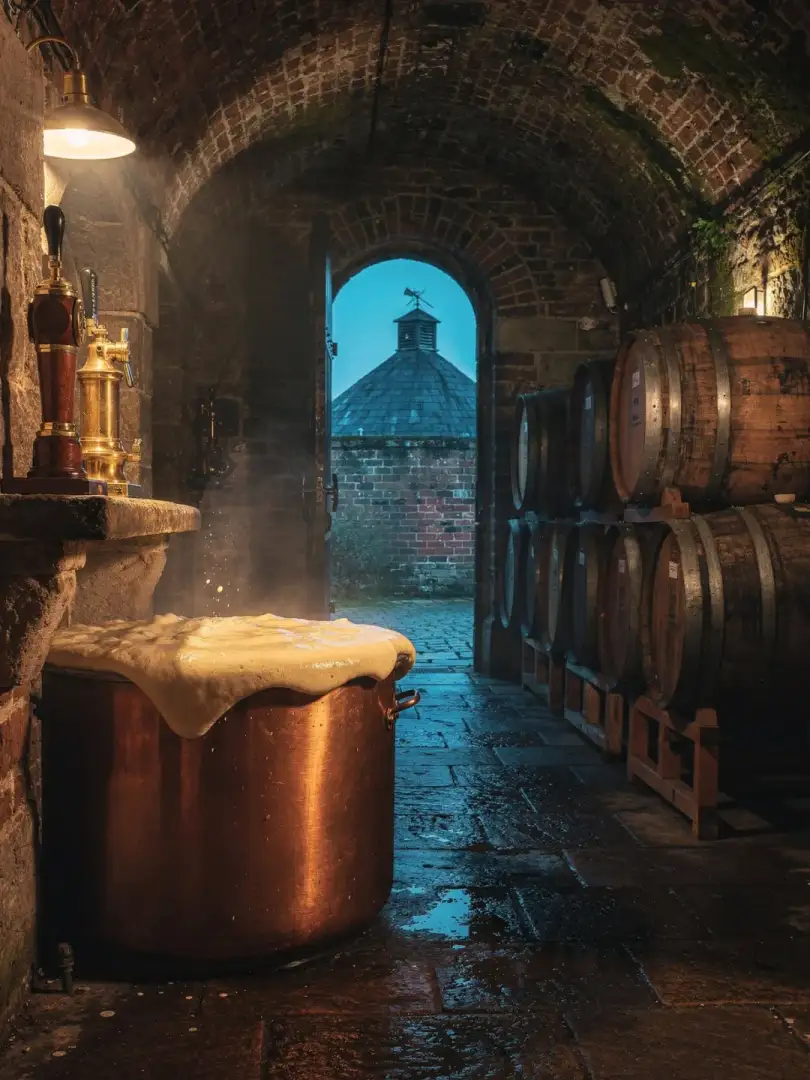
Kentish Ale is a top-fermented beer, meaning the yeast works at warm temperatures, often around 18 to 22°C (64 to 72°F), and rises to the top of the wort after fermentation. This produces fruity esters, aromas of pear, apple, or orange peel. That's the main difference from a lager, which ferments cold and tastes more neutral.
Under the origin rules for Kentish Ale, a traditional yeast strain is also required. Exactly which cells are at work in Faversham's fermenting vessels isn't something the brewery reveals in detail. What matters is that the yeast has been passed down through generations. A portion of the yeast is harvested after each brew and reused in the next, keeping the flavor consistent.
After primary fermentation, the beer doesn't go straight into the bottle. Cask ale, the classic English draft beer, continues to mature in the cask in the publican's cellar. It's not filtered, not pasteurized, and not force-carbonated from a bottle. The yeast remaining in the cask slowly produces gentle carbonation, giving the beer a soft fizz.
That takes time and care. The publican stores the cask at cellar temperature for several days, lets it settle so the yeast and haze drop out, and then taps it with a hand pump. Once tapped, the beer only lasts a few days. So the publican bears much of the responsibility for how the beer tastes in the glass.
Bottled beers from Kent, such as the heavier Bishops Finger, are filtered and shelf-stable by contrast. With Kentish Strong Ale, fermentation runs longer and the yeast converts more sugar, hence the higher alcohol content.