Pale Barley Malt
Malt & Grain
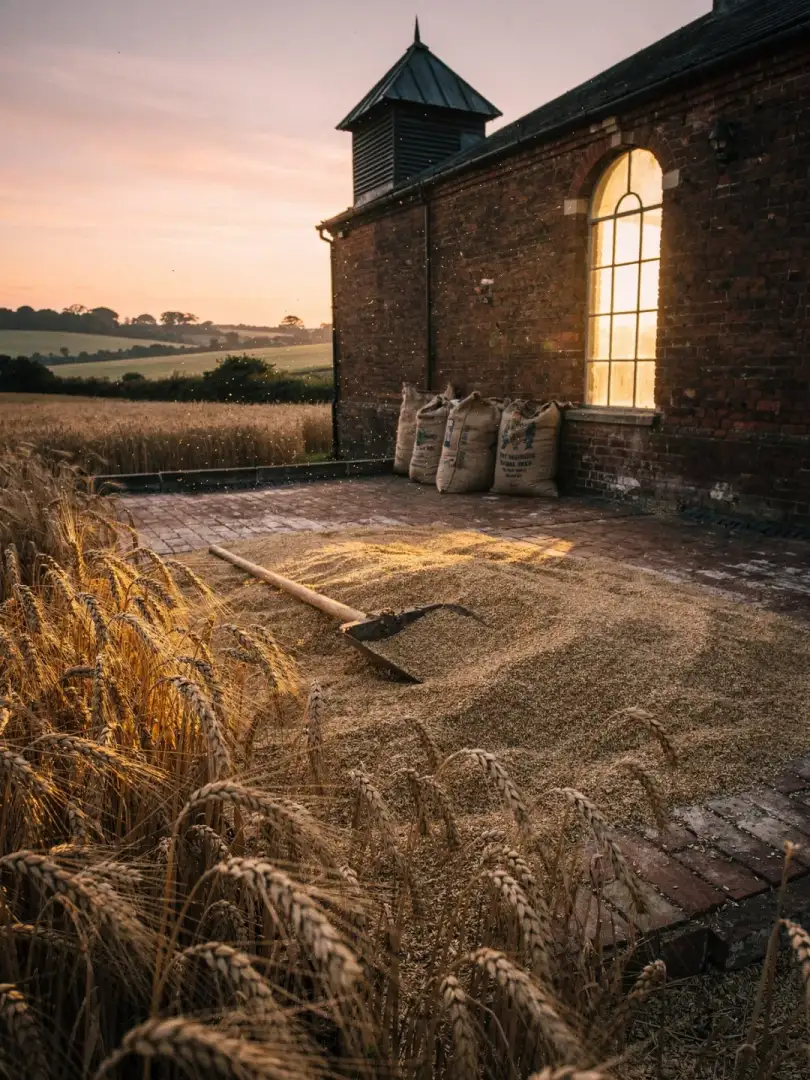
A Kentish Ale starts with barley, specifically a pale, gently kilned malt. English brewers call it pale malt. Kilning means drying the sprouted grain with warm air, which shapes both color and flavor. The pale version tastes of biscuit and fresh bread, and it leaves room for the hops to shine.
British ales favor winter barley. One variety in particular has shaped its reputation: Maris Otter, bred in Cambridge in 1965 and 1966, still popular among brewers and maltsters today. Barley grows in Kent itself too, mostly in the east and across the fields around Faversham. Which maltings supplies a given brewery depends on the producer and can change over time.
For darker beers, the pale base malt is often joined by a portion of caramel or crystal malt. It's kilned while still moist, so the sugar inside the grain solidifies. This gives amber color, sweetness, and a toffee note. In a strong beer like Bishops Finger, this provides the body that carries the hop character.
The key difference lies in how it compares to German malt. British brewers mostly use a simple infusion method: the malt is mashed in hot water in a single step and converted to sugar, without temperature rests. This requires the malt to be well modified beforehand. That's why English malts tend to be kilned a bit more intensely than German pilsner malt would tolerate.
With grain from southern England and hops from the garden next door, Kent is a region where raw materials travel short distances. That's what makes Kentish Ale so easy to understand: knowing just these two ingredients already reveals half its character.