Pub, Pie, Mash
Food & Beer Culture
Why does all of London go to the pub? Because "public house" literally means a public house, a gathering place, not merely a place to drink. You order at the bar and pay immediately; servers don't bring the beer to you. When coming with friends, people often buy a "round," meaning a round for everyone, with each person taking a turn to pay. Just before closing, the landlord calls "last orders" and rings a bell.
Many pubs long belonged to breweries, known as "tied houses." Fuller's, too, runs its own pubs, which weren't included in Asahi's 2019 purchase. Among the historic houses is the George Inn in Southwark, a coaching inn with galleries around its courtyard, now cared for by the National Trust. Ye Olde Cheshire Cheese on Fleet Street was rebuilt after the Great Fire of 1666.
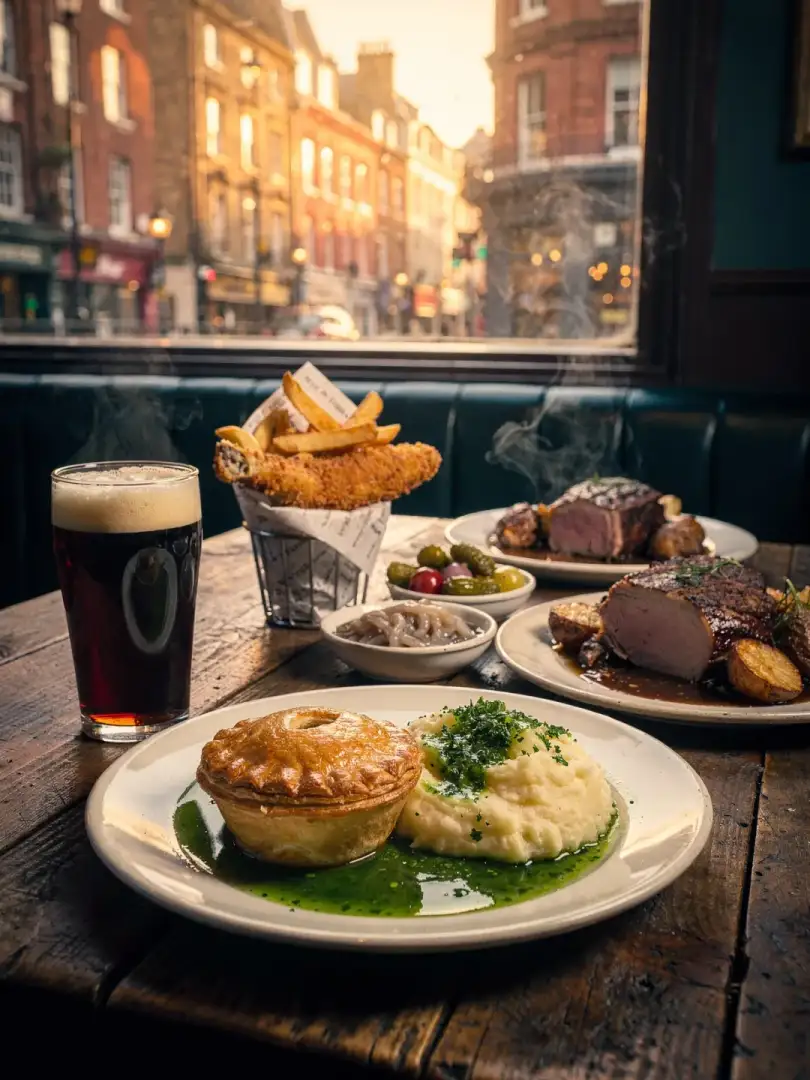
Typical London dishes include pie and mash, a meat pie with mashed potatoes and a green parsley sauce called "liquor," and jellied eels, a dish from the East End. There's also fish and chips, battered fish with thick-cut chips, and the Sunday roast, a roast dinner with vegetables served on Sundays. A Ploughman's Lunch of cheese, bread, pickles, and chutney pairs well with bitter.
Why does beer suit this food so well? The mild bitterness and low carbonation of Best Bitter cut through fried food without overwhelming it. Porter, with its roasted notes, stands up well to rich pies. In the past, people ate oysters alongside it, and dark beer was the customary drink to accompany them.
Beer is ordered in pints or half pints, meaning 568 or 284 milliliters. The pint is the standard, the half pint for a smaller thirst. Those seeking enjoyment over quantity can order small.