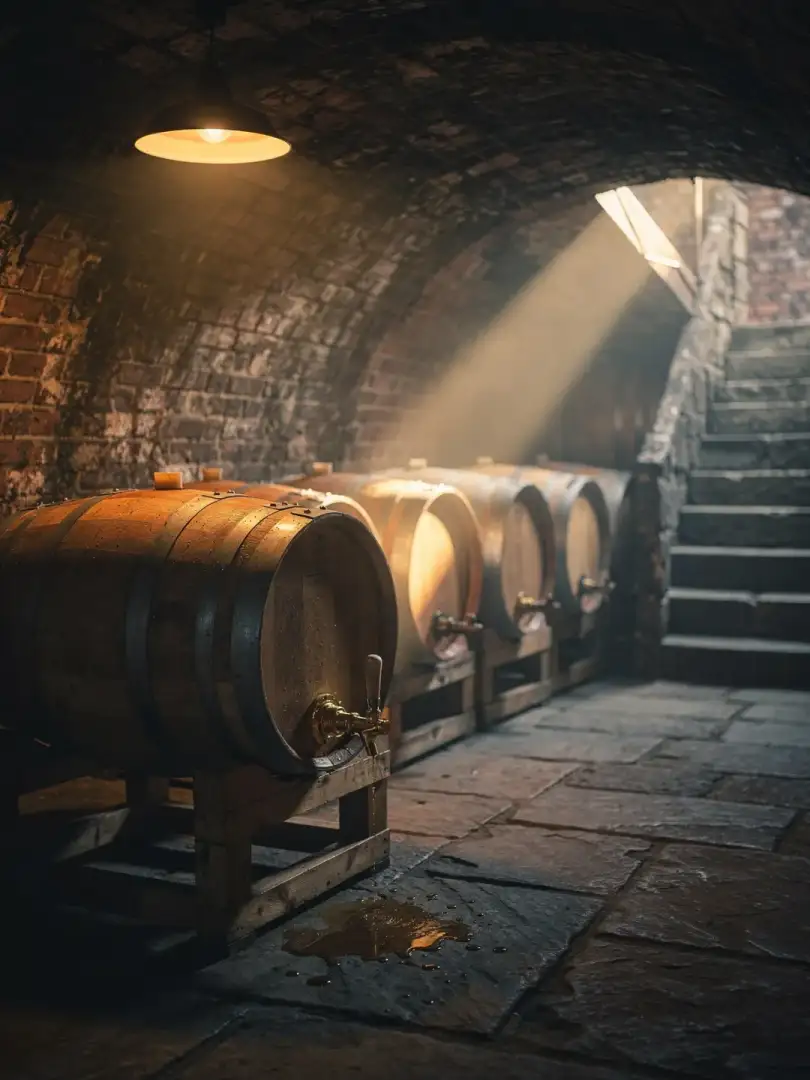
Cask & Secondary Fermentation
Yeast & Fermentation
Is mild top- or bottom-fermented? It's an ale, and thus top-fermented: the yeast works at room temperature and rises to the surface toward the end of fermentation. With lager it's the reverse, the yeast works cool and sinks to the bottom. Warm fermentation produces fruity notes especially prized in ales.
What's special about cask ale, as delivered by Robinsons, Holt's, Hydes, and Thwaites, is the secondary fermentation in the cask. The beer leaves the brewery unfiltered and unpasteurized, with a bit of live yeast, and continues maturing in the pub cellar. This is where the fine carbonation develops, and aroma continues to build.
A finings agent is often added to help the yeast settle and clear the beer. The cask then needs a few days to rest before it's tapped. Landlords who master this craft produce a beer that tastes fresh and easy-drinking.
Craft brewers take a different path. With hazy IPA, the haze is intentional: yeast, hop oils, and proteins stay in suspension, and the beer is usually packaged in cans or airtight kegs. Cloudwater set up a facility with 20 US barrels, imported from the States, at the Piccadilly Trading Estate in 2014.
Cask ale doesn't keep for long once tapped, since air enters the cask. That's why good mild is considered above all a matter of cellar care and a landlord who can empty his cask within a few days.