Kent, New World
Hops
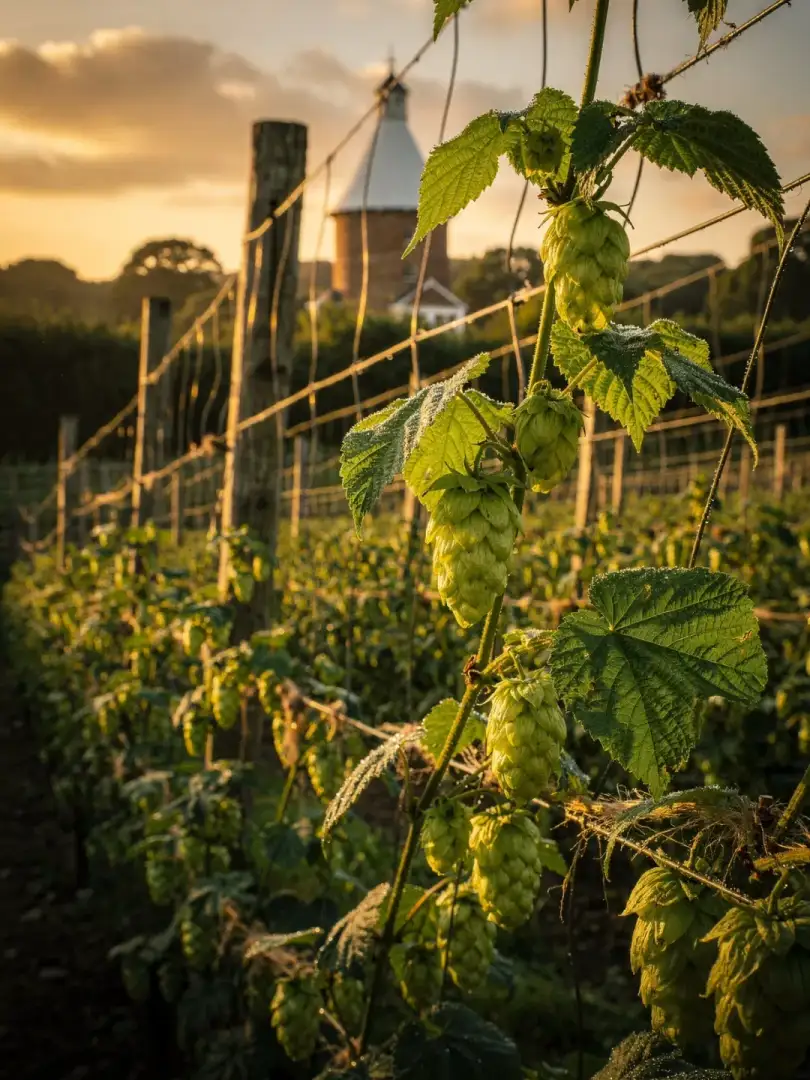
No hops grow in or around Manchester. Family brewers have always sourced theirs from England's hop-growing counties to the south, in Kent, Herefordshire, and Worcestershire. Typical varieties are Fuggle and East Kent Goldings, both with an earthy, slightly floral aroma reminiscent of herbs.
East Kent Goldings have carried the EU's protected designation of origin seal since 2013. For Northwest beers that serves as a quality marker, but what matters is the taste: these varieties give bitter its characteristic spice, evoking hay, tea, and damp earth rather than citrus fruit.
Hops contribute two things. Bitterness comes from alpha acids released during the boil; it's measured in IBU, a scale on which mild sits at 10 to 25 according to BJCP, and bitter at 25 to 40. Aroma comes from essential oils that evaporate during boiling and are therefore added late or cold.
The craft scene has looked across the Atlantic and as far as New Zealand. Craft brewers reach for US and New Zealand varieties for their hazy IPAs, hops that smell of mango, grapefruit, or passion fruit, such as Citra, Mosaic, and Nelson Sauvin. For hazy IPA, BJCP bitterness values run from 25 to 60 IBU, yet the impression is often softer because the aroma masks the bitterness.
Dry hopping is key to this effect. Here hops don't go into the boiling wort but into the finished or fermenting beer, releasing their aroma without adding much bitterness. The difference between an earthy bitter from Stockport and a fruity hazy IPA from Manchester comes down largely to this.