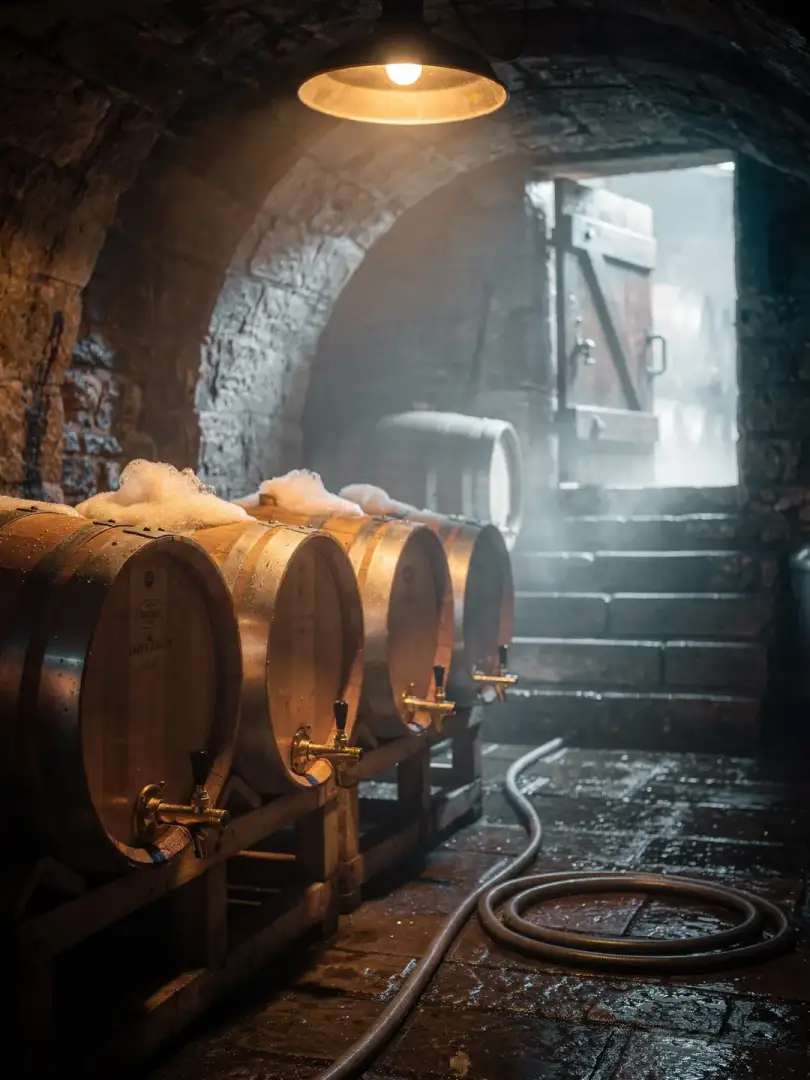
Cask in the Cellar
Yeast & Fermentation
Is bitter top-fermented or bottom-fermented? Top-fermented, which means the yeast works warm, at around 18 to 22 degrees Celsius, and rises to the top of the fermentation vessel as it works. Ale yeast produces fruity esters, which is why many Welsh beers carry notes of pear, orange, or marmalade. Primary fermentation usually takes about a week.
What makes the pub experience special is cask ale. The beer isn't filtered or pasteurized; instead, it's racked into the cask while still fermenting and continues to mature in the pub's cellar. That's where the beer develops its fine, natural carbonation, gentler than what you get from a bottled beer. After a few days, the yeast settles, and the beer clears.
Cellar temperature during this process runs around 11 to 13 degrees Celsius, considerably warmer than keg lager, and that's why bitter doesn't arrive at the pub ice-cold. Drink cask ale too cold and you lose much of the flavor. Too warm, on the other hand, and it turns flat within a few days.
Alongside this, there's beer from the keg, a metal cask with added carbon dioxide, and beer from the can. Both keep longer and are easier to transport. Felinfoel embraced canning early on, and today's craft breweries package plenty of beer in cans with live yeast still inside. The Brains brewery in Cardiff still pours its bitter from the cask, and many pub-goers in Wales drink their bitter and mild straight from the handpump.