Bitter and Mild
Beer Styles
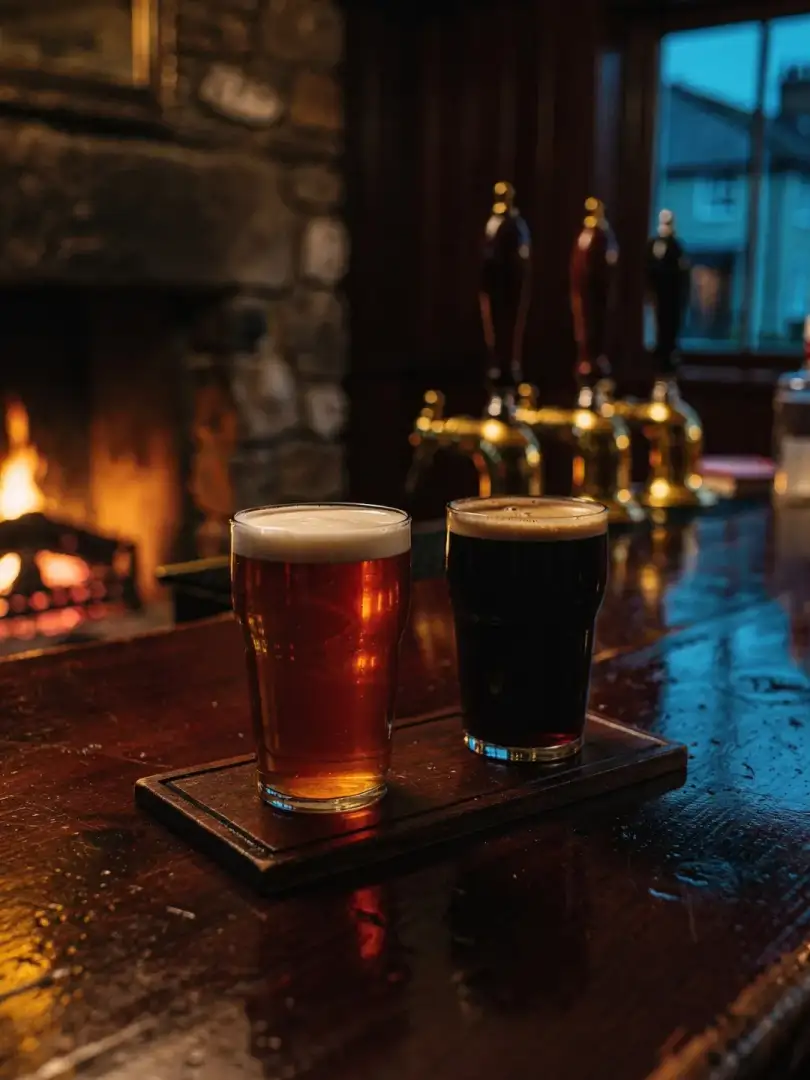
What is a best bitter? It's a copper to golden-brown ale with 3.8 to 4.6 percent ABV, restrained hop character, and a malt body reminiscent of bread and toffee. Brains SA, the brand's flagship beer, is considered a malty best bitter. It tastes drier than a pale ale but has less hop fruitiness than an IPA.
What is a dark mild? It's a dark brown ale with just 3 to 3.8 percent ABV, lightly roasted, with a hint of chocolate. "Mild" originally didn't mean "dark" at all, but rather a young beer that hadn't been aged for long. Only later did it become a style designation in its own right. Tomos Watkin of Swansea keeps a 3.4 percent dark mild in its lineup.
The difference from porter and stout lies in strength and roast intensity. A dark mild is lighter, less bitter, and far less bitter-roasty than an Irish stout. So switching from bitter to mild usually means trading up for something gentler, not stronger.
There's no dedicated style guideline for Welsh ale. Breweries take their cues from English models but give their beers Welsh names. Cwtch, from Tiny Rebel, is a red ale, and the Welsh word means a hug or a cozy nook. So the beer mats in the pub speak Welsh, even if the recipe has English roots. Order a Welsh ale, and you'll generally get an English-style bitter wearing a Welsh name and local pride.
Best Bittertop-fermented
- Original gravity
- 10–11.9 °P
- Alcohol
- 3.8–4.6 % vol
- Bitterness
- 25–40 IBU
- Colour
- 16–32 EBC
Copper to golden-brown, bread crust and toffee, moderately bitter, dry finish.