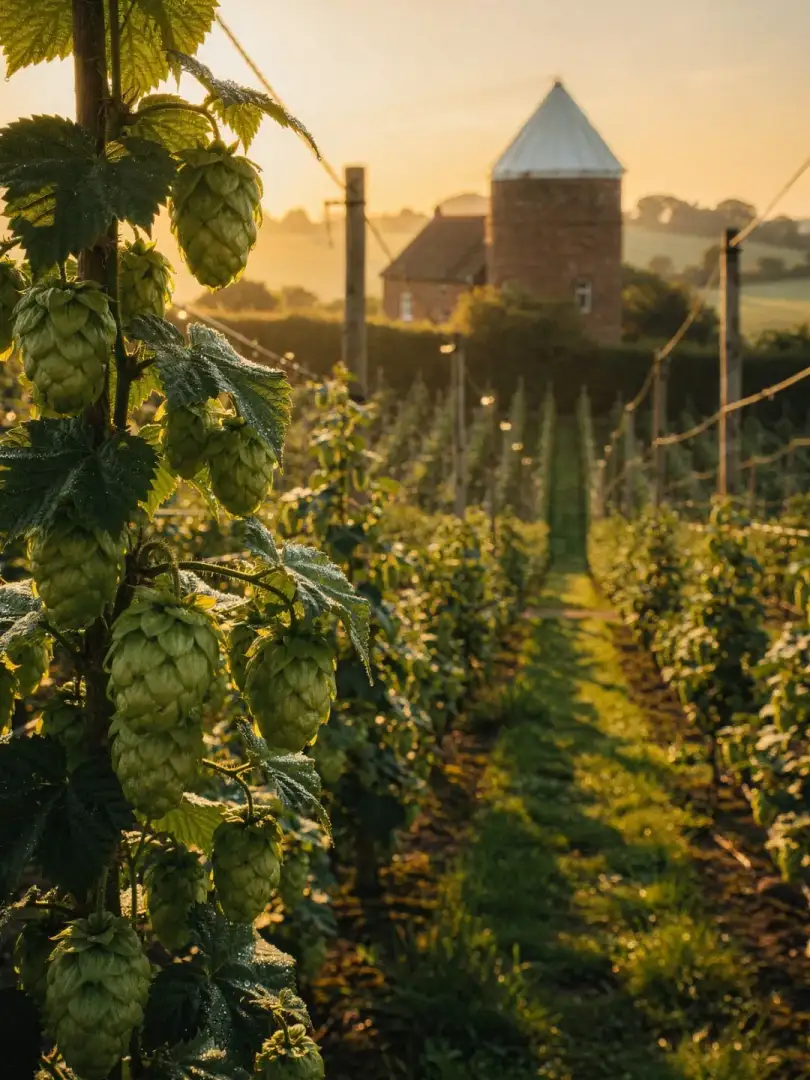
Goldings and Fuggle
Hops
Hops hardly grow in Yorkshire at all; England's hop country lies further south. Kent is famous for its varieties East Kent Goldings and Fuggle. East Kent Goldings has held protected designation of origin status in the EU register since 2013.
What do these varieties do in beer? Goldings and Fuggle taste earthy, spicy and slightly floral, quite unlike the citrus and fruit aromas of American hops such as Cascade. They suit the malt character of a bitter, which isn't meant to be overwhelmed. Hops are often added in several stages during the wort boil: early for bitterness, late for aroma, since the volatile aromatic compounds boil off over a long cook.
Hops have two jobs. They provide bitterness, which balances the sweetness of the malt, and they provide aroma. Bitterness is measured in IBU, international bitterness units. According to the BJCP, a best bitter sits at 25 to 40, an old ale between 30 and 60.
So the brewers in Tadcaster, Masham and Keighley buy their hops from far afield. That's nothing unusual: in Germany too, not every brewery brews where its hops grow. A label usually says little about this. What matters more is whether the beer tastes balanced overall — whether bitterness and malt sweetness are in equilibrium.
Even so, tasting reveals a fair amount. A dry, slightly bitter finish with a hint of grass or tea points to English hop tradition. Fruity and juicy, on the other hand, would suggest an American craft IPA. Try both side by side and the difference is immediately obvious.