Slate and Cask
Yeast & Fermentation
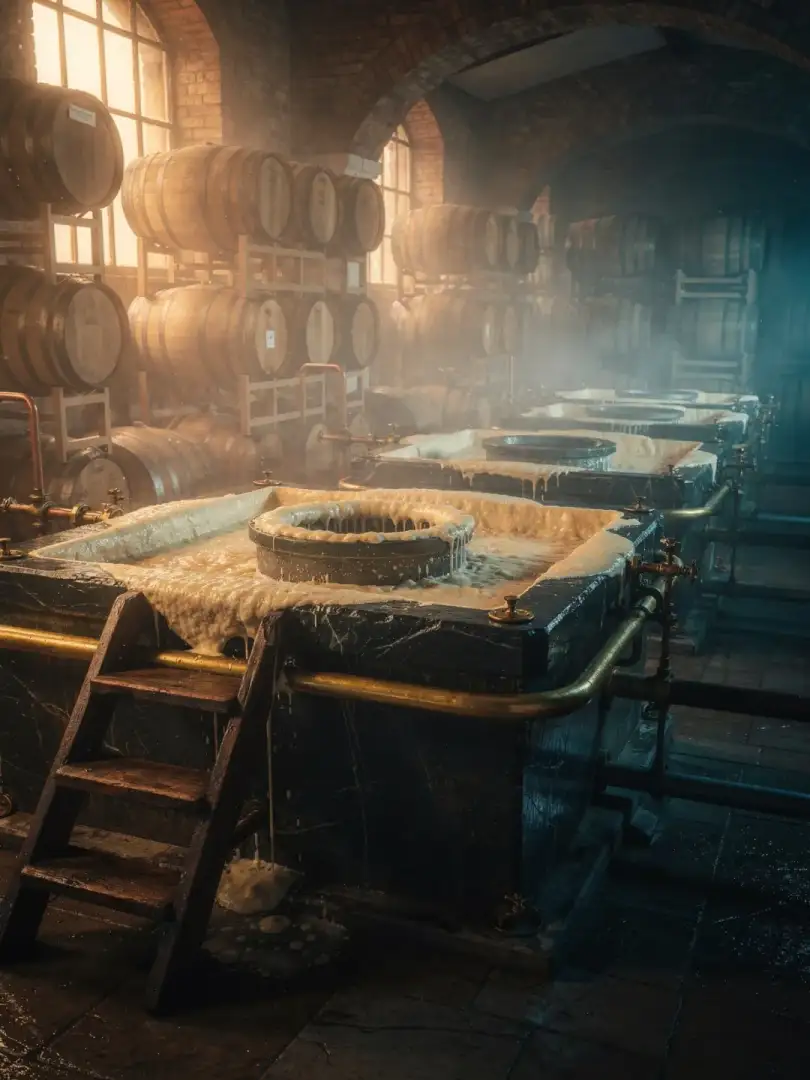
What is a Yorkshire Square? It's a two-tiered fermentation vessel, originally made of stone, later of slate, and today often of stainless steel. The lower chamber is separated from the upper deck by an opening in the middle. During fermentation, the yeast rises as foam through this hole onto the upper deck.
The advantage lies in yeast management. The foam collects on top, where the healthy yeast can be skimmed off and reused, while the beer below stays clear. It's an open system, so the yeast is in contact with the air, which means brewers have to work cleanly. Because the foam and the beer separate, the process also produces a beer with a particularly clean body, say proponents of the method.
According to the brewery, Samuel Smith still ferments all its ales and stouts in slate Yorkshire Squares today. Timothy Taylor uses a mix of squares and modern vessels. There the beer ferments for three to five days at around 19.5 degrees Celsius.
All these beers are top-fermented, meaning fermentation takes place at room temperature. The yeast works in the warmth and rises to the top, unlike a pilsner, where it stays settled at the bottom in the cold.
The second stage takes place in the cask. Cask ale — beer that undergoes secondary fermentation in the cask — goes into the cask unfiltered and alive, and continues to mature in the pub cellar. Samuel Smith delivers its naturally conditioned cask ale in oak casks built and repaired by the brewery's own cooperage.