Imported Bitterness
Hops
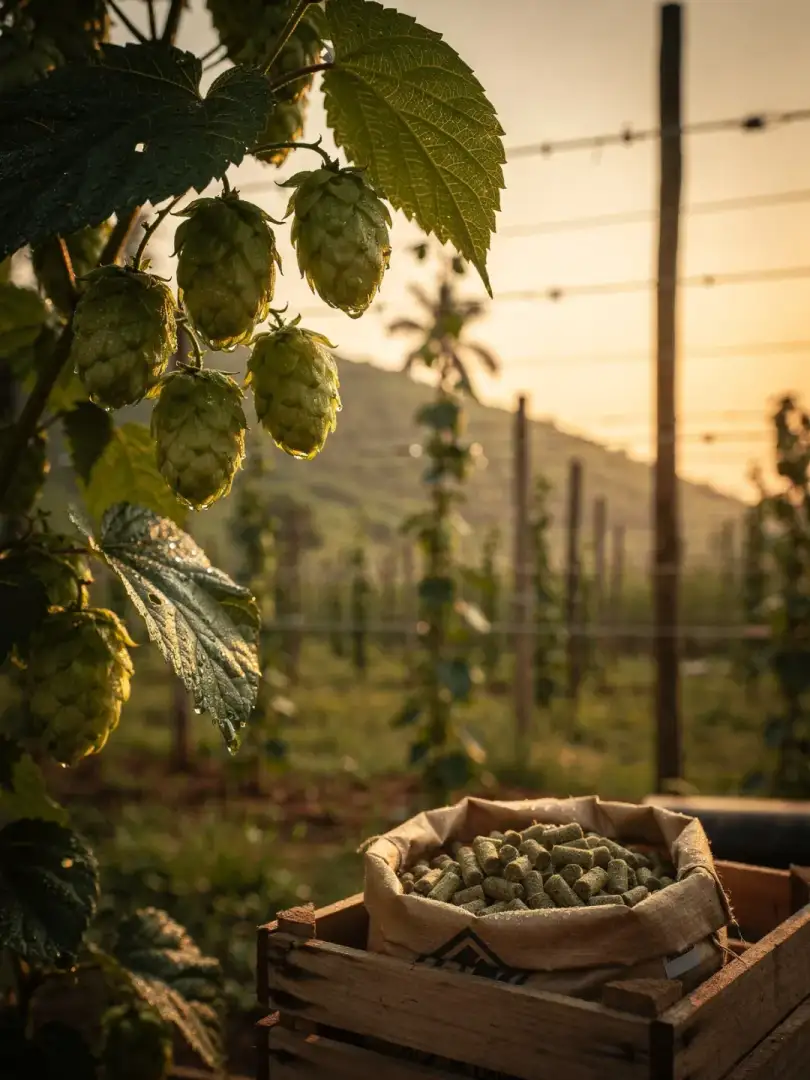
Hops barely grow in India, and Bengaluru is no exception. The plant needs cool nights and long summer days that simply don't exist at this latitude. Brewers in the city therefore source their hops from abroad, mostly as pellets — pressed grains made from dried cones that store and ship well.
Hops give beer two things: bitterness and aroma. The bittering compounds, the alpha acids, dissolve as the wort — the still-unfermented liquid of malt and water — is boiled. The aroma comes from essential oils that evaporate during boiling, which is why hops are added late, or even cold, in the fermentation tank. Bitterness is measured in IBU, International Bitterness Units.
India's major lagers keep their bitterness restrained. A beer like Kingfisher is meant to quench thirst in the heat, not challenge the palate, and mildly hopped lagers pair well with spicy food because they don't add further irritation to the tongue.
In the brewpubs, tastes have shifted. Here you'll find boldly hopped beers in the style of American pale ales and IPAs, with notes of citrus, pine, and tropical fruit. Hop varieties like Cascade, Citra, or Mosaic, grown mainly in the US and New Zealand, make their way to Bengaluru.
This closes a circle. The origin of IPA lay in 19th-century England, a pale, heavily hopped export beer that found particular success in India. Today the hops travel in the opposite direction, from America and New Zealand into an Indian brewhouse.