Heat & Cooling
Yeast & Fermentation
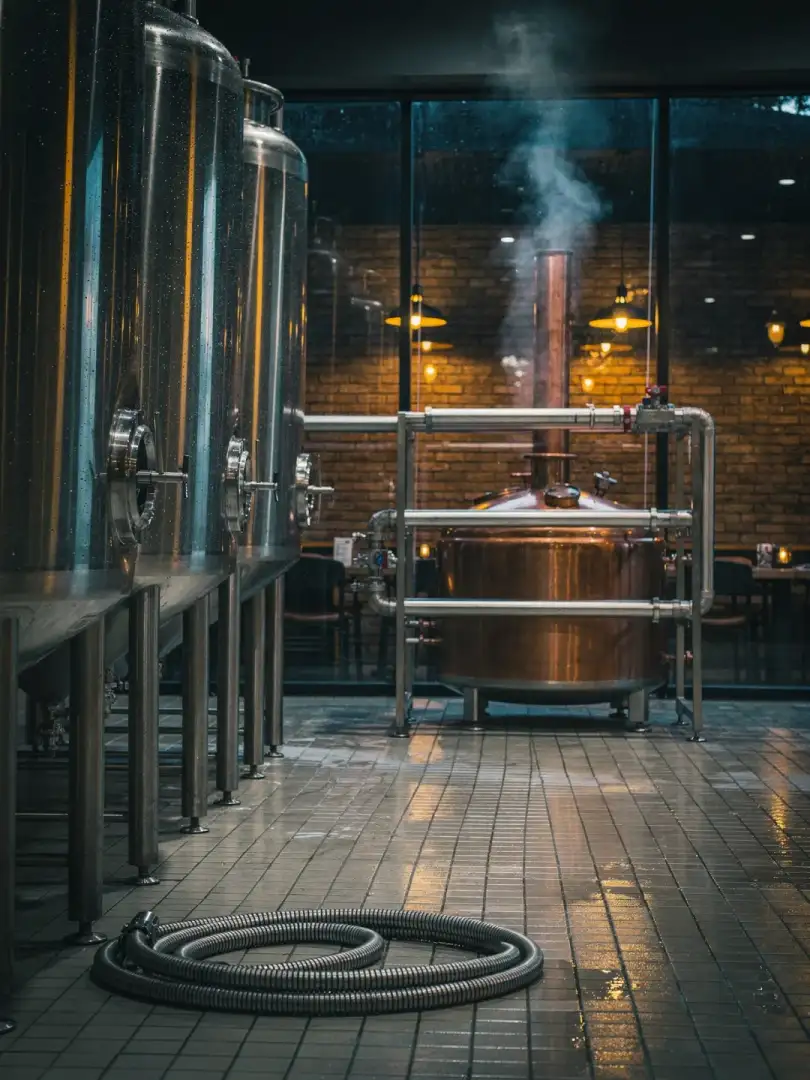
Yeast converts the sugar in wort into alcohol and carbon dioxide, and in Bengaluru it's the part of brewing that suffers most from the warmth. Fermentation generates heat on its own, and with outdoor temperatures climbing high in spring, a fermentation tank without cooling quickly falls out of rhythm. Brewers therefore rely on stainless steel tanks with cooling jackets, which allow temperature to be controlled to the exact degree.
India's major lagers, Kingfisher chief among them, are bottom-fermented. Bottom-fermented means the yeast sinks to the bottom at the end of fermentation and works at low temperatures, usually between 8 and 12 degrees Celsius. The beer ferments slowly, then matures cold for weeks, emerging clear and smooth. In a country where cooling is costly, such a lager demands a brewery with serious technical investment.
Brewpubs often work differently. They brew many top-fermented beers — witbier, pale ale, or IPA. Top-fermenting yeast rises to the top and ferments at 18 to 22 degrees Celsius, a range a brewhouse can manage more easily without a massive cooling system. Fermentation wraps up within a few days, and the beer can be poured after only a short maturation.
In witbier, the yeast plays a visible role. It produces esters, aromatic compounds reminiscent of banana, and phenols with a hint of clove. In IPA, it steps back and lets the hops take center stage. Unfiltered wheat beers look cloudy because yeast and protein remain suspended in the glass.
Maturation happens where fermentation and serving often coincide: in the serving tank. Many brewpubs pour beer straight from the tank behind the bar, so it travels only a few meters from tank to glass. There are no wooden casks or rock cellars here — the cold room and stainless steel handle that job instead.