Barley and Roasting
Malt & Grain
Why is stout black? The color comes from roasting. A stout usually has a pale base malt as its backbone, plus heavily roasted barley and dark malts that bring coffee, cocoa, and bitter chocolate to the glass. That holds true for Murphy's Irish Stout as much as for Beamish — both brands stand in this tradition. Anyone ordering a pint in Cork sees that color in the glass at the bar every evening.
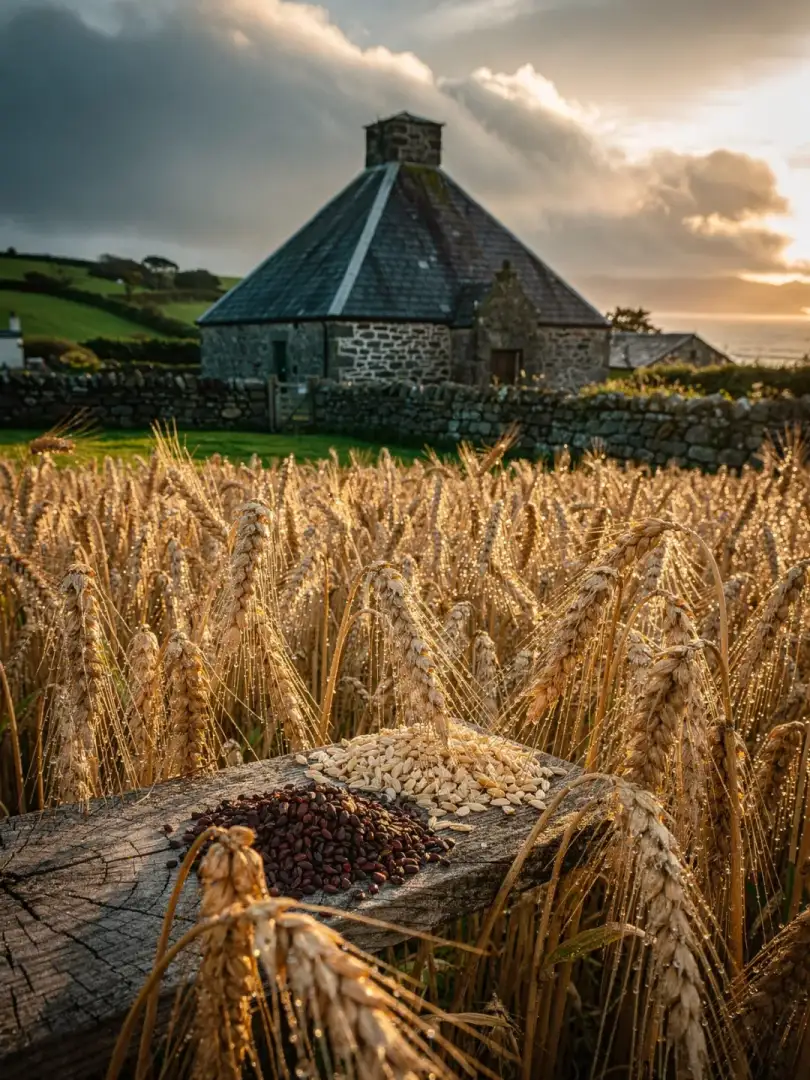
Part of the barley isn't malted at all, but roasted raw. Malting means the grain is soaked in water to germinate, then dried again, or kilned. That produces malt whose starch the yeast can later ferment. Roasted barley, by contrast, mainly contributes color and a dry, bitter edge.
The style guideline for Irish stout calls for a color of 49 to 79 EBC. EBC is the European color scale, on which a pale pilsner sits at 4 to 8. Stout is therefore roughly ten times darker — nearly black with ruby edges when you hold the glass up to the light.
Under this guideline, original gravity sits at 9 to 11 degrees Plato. That's the sugar content of the wort before fermentation, and the figure is low. That's why the beer stays light at 3.8 to 5 percent alcohol, despite looking so dark.
The misconception that dark means heavy is easily disproved here. Color and strength have little to do with each other. A Cork stout weighs in lighter than a Bavarian Märzen, which looks pale in the glass yet brings considerably more original gravity with it.