Bitterness Without Blossom
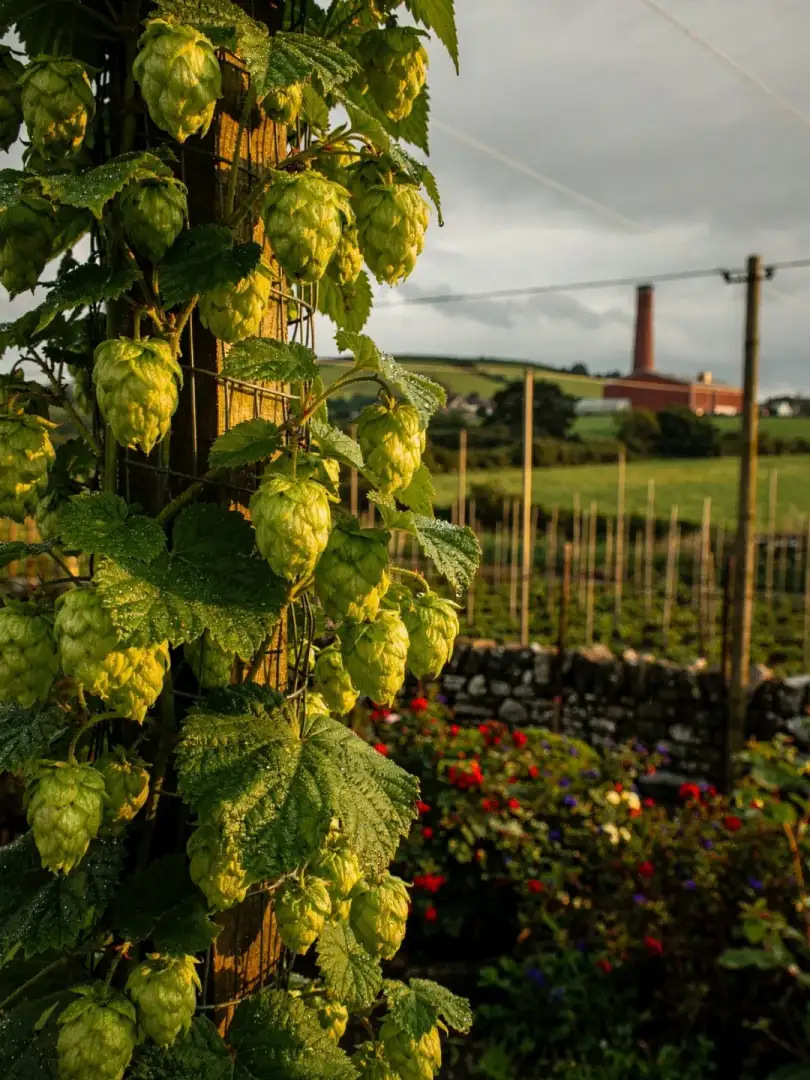
Hops
How bitter is stout? The style guideline for Irish stout specifies 25 to 45 IBU. IBU is the unit of bitterness, and a German pilsner ranges from 22 to 40 depending on the brewery. Stout therefore sits in the same range, but it feels completely different on the tongue.
The difference comes from the roasting. The bitter compounds from the roasted barley combine with those from the hops to create a dry, bitter line that tastes like espresso. The hops themselves stay in the background — floral and citrus notes have no place in Cork stout. Murphy's Irish Stout and Beamish live off roasting and bitterness, not hop aroma. This contrast with IPA is the quickest way to understand the style.
In the English-Irish beer family, earthy, herbal varieties are standard. These include Fuggle and East Kent Goldings from Kent, where the name Kent also serves as a protected designation of origin for the Goldings.
Hops have a second job that's easy to forget. Their resins help preserve the beer and protect it from spoilage organisms. That mattered greatly in the 18th and 19th centuries, when porter and stout were stored in large casks and traveled long distances.
Anyone wanting to understand hops as an ingredient has it easier in Cork than in hop-growing regions. Rebel County isn't hop country, but it's a good place to taste just how important bitterness is. Here you see what hops achieve without an aroma show: they give the beer backbone. Without that bitterness, the sweetness of the roasted malts would turn cloying, and the stout would taste like a malt drink.