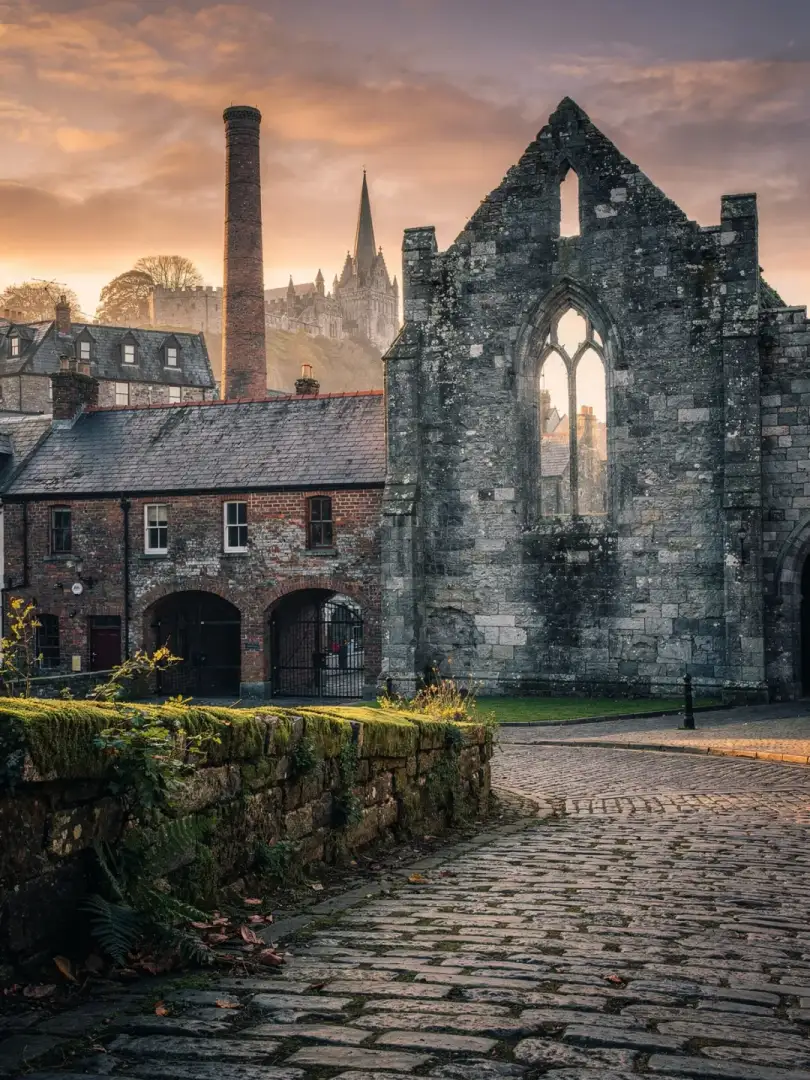
Abbey and Brewery
Region & History
Where does Irish Red Ale come from? According to popular tradition, from Kilkenny, where Franciscan friars brewed beer in the Middle Ages on the edge of the old town. When the abbey was dissolved in 1537, the site remained, and by 1710 John Smithwick's brewery stood there. Today you can walk the Medieval Mile, the road from the castle to the cathedral, and pass right by the spot.
Smithwick was Catholic, and under the penal laws of the time, he wasn't allowed to own land. So the fact that the property belonged to him stayed hidden at first. The St. Francis Abbey Brewery grew nonetheless and remained in the hands of the Smithwick family until 1965. Then Guinness took it over, and the brand has belonged to the group ever since—today known as Diageo.
In 1987, Guinness launched an export brand of Smithwick's called Kilkenny. The name was easier to pronounce abroad, and the beer was meant to be sold mainly in Europe and Canada. It later developed into its own variety, with a redder color, more bitterness, and more foam.
Production in Kilkenny ended on December 31, 2013. Since then, Smithwick's has been brewed at St. James's Gate in Dublin. The brewery in Kilkenny was considered, toward the end, the oldest still-operating brewery in Ireland, and the site passed to Kilkenny Borough Council. Part of it was used for a time as the Smithwick's Experience visitor centre.
There is no EU protected designation of origin for Irish Red Ale. The name describes a style, not an origin. Anyone looking for new breweries in the southeast today will find them in the neighboring counties—for instance, the Carlow Brewing Company in Bagenalstown, founded in 1996, which, by its own account, counts among the pioneers of Irish craft brewers.