Wells and Limestone
Water & Soil
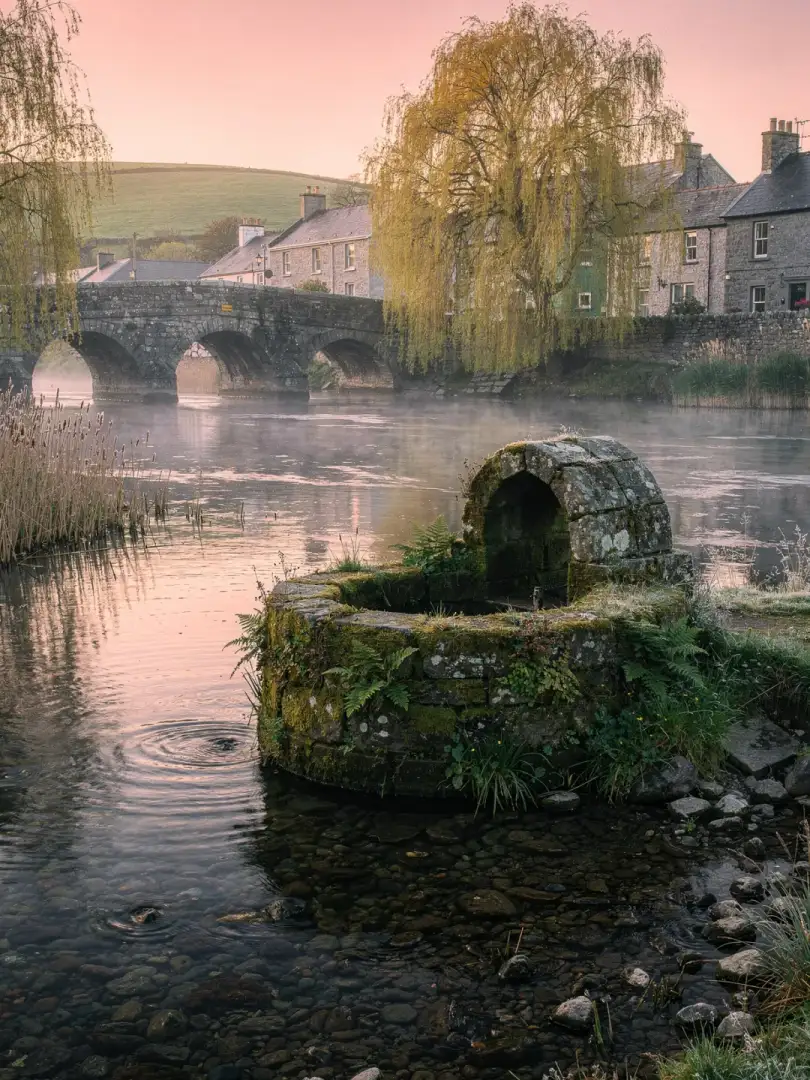
The water for Smithwick's came from a well the abbey's monks once dug. St. Francis' Well, according to tradition, lay roughly 45 meters northeast of the monastery and now sits beneath one of the brewery buildings.
The River Nore flows through Kilkenny, and the city carries the nickname Marble City after the dark limestone quarried in the surrounding area. Limestone bedrock typically produces hard, carbonate-rich water. This matters to brewers because such water buffers the acidity of darker malts and rounds out the flavor.
With a red ale, the difference between soft and hard water shows up mainly in the bitterness. Hard water makes it feel firmer, soft water makes it seem gentler. Just how hard the water from the abbey's well actually was can no longer be measured, since brewing no longer takes place there. Standing on the spot today, you hear the Nore instead of the brew kettles, and you see why the monks chose this place by the river: spring, river, and town all lay close together.
The climate suits the beer. The southeast is one of the drier, sunnier parts of Ireland, and the Atlantic keeps winters mild and summers moderately warm. Barley ripens reliably here, and a cellar in town stays evenly cool without any technology. The same goes for the Nore, the Barrow near Carlow, and the Suir near Waterford: they supply water for both the fields and the brewhouse.