Roasted Barley and Caramel
Malt & Grain
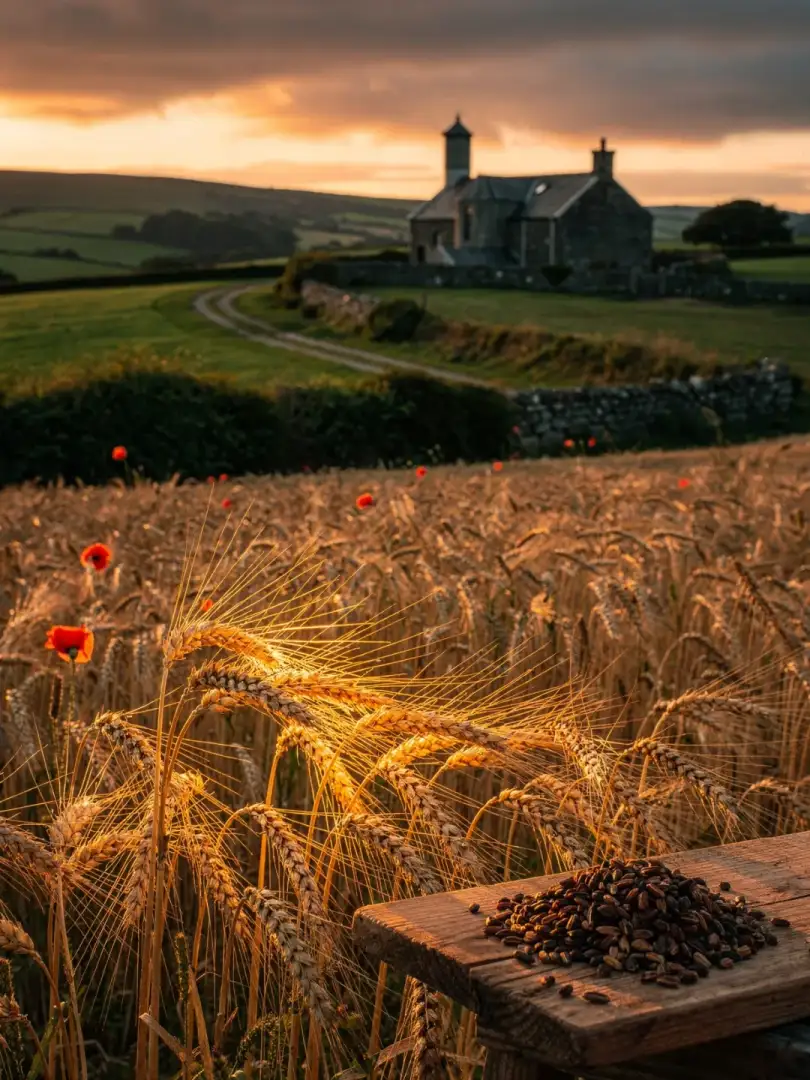
What gives an Irish Red its color? Alongside the malt comes a small proportion of roasted barley—barley that isn't malted but roasted directly. It tints the beer ruby red and lends a faint coffee note. Caramel malts add sweetness and toffee notes. The blend determines whether a Red leans more toward biscuit or toward roast.
Southeast Ireland is barley country. Barley is Ireland's most important arable crop, and spring barley acreage averages around 123,000 hectares over a ten-year span. A large share of it grows in the area around Kilkenny, Carlow, Wexford, and neighboring Kildare, and nearby maltings process it.
The best known is Minch Malt in Athy, just across the border in Kildare. Matthew Minch opened his first malting business there around 1845. In 1921 the firm merged with maltster P. R. Norton, who had sites in counties Carlow, Laois, and Kilkenny. Today Minch Malt belongs to Boortmalt and, by its own account, works with more than 600 farmers.
Malting means: the barley is moistened so it germinates, then dried in the kiln. This produces enzymes that later convert starch into sugar. The longer and hotter the kilning, the darker and more roasted the malt becomes. For a Red, moderate roasting is enough, since the beer should stay reddish-brown rather than turn black. Set it next to a dark stout and the difference is immediately clear: there, roasted barley is the main act, here it's just a seasoning.