Dry-Hopped
Hops
What does dry hopping mean for a Pils? The brewer adds hops not to the boiling wort but to the cold, nearly finished beer. Boiling drives the aroma out of the hops, while cold temperatures keep the fragrant compounds in the glass. The result is a beer that smells of flowers, herbs, and hay—without becoming more bitter.
Agostino Arioli brought this technique into the lager cellar back in 1996. It originates from the world of English ales, where it was unusual at the time for a bottom-fermented Pils. According to the brewery, Tipopils is dry-hopped twice.
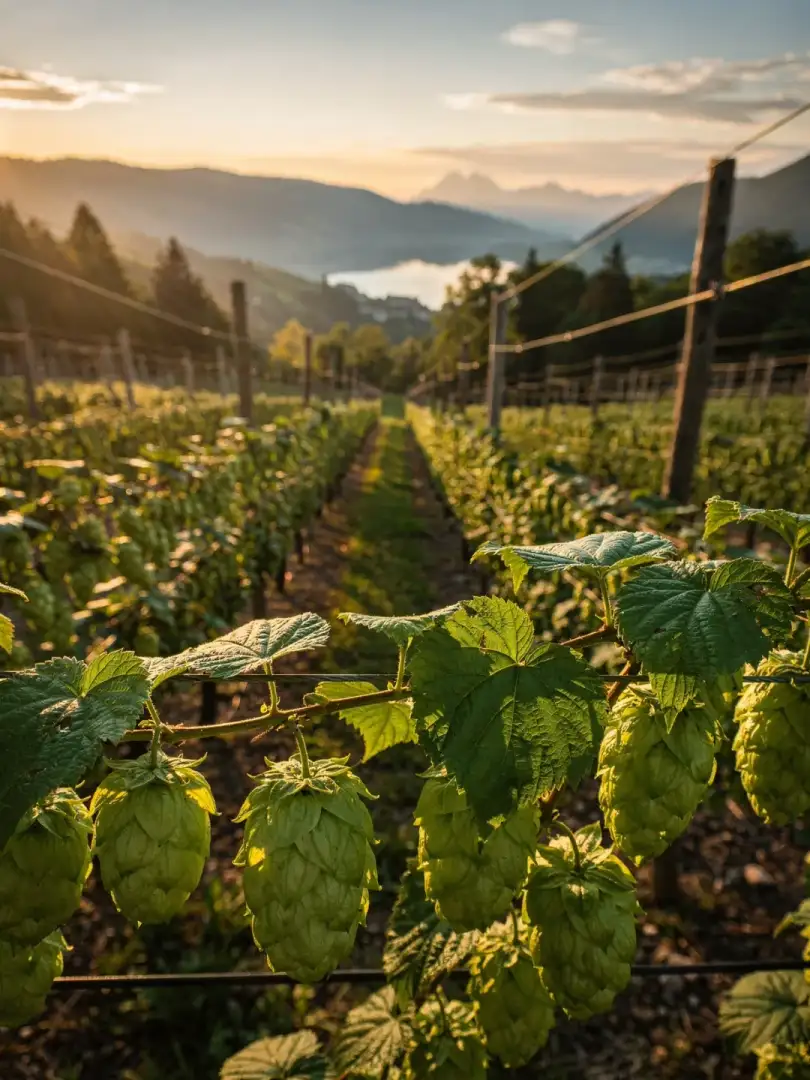
Hops barely grow in Lombardy, so they're bought in. According to press reports, most of the hops for Birrificio Italiano come from Tettnang and Slovenia. Tettnang hops have held PGI protection since 2010, and Štajerski hmelj from Styria since 2017. There's no notable hop-growing area in Lombardy to speak of.
Two things should be kept separate. Bitterness comes from boiling, during which the hops' alpha acids dissolve, and it's measured in IBU. Aroma comes from the essential oils that remain in the beer through dry hopping. A German Pils, by style guideline, sits at 22 to 40 IBU, but with Italian Pils the aroma pushes much further to the front.
Timing also matters. Hops added late in the boil or cold into the beer deliver aroma rather than bitterness. That's why Tipopils, despite its strong aroma, doesn't come across as heavy.