Pale Pilsner Malt
Malt & Grain
What malt goes into an Italian Pils? Pale Pilsner malt—barley that's first allowed to germinate and then gently dried. This drying process is called kilning. If the heat stays low, the malt turns almost white, and the beer later comes out straw-colored.
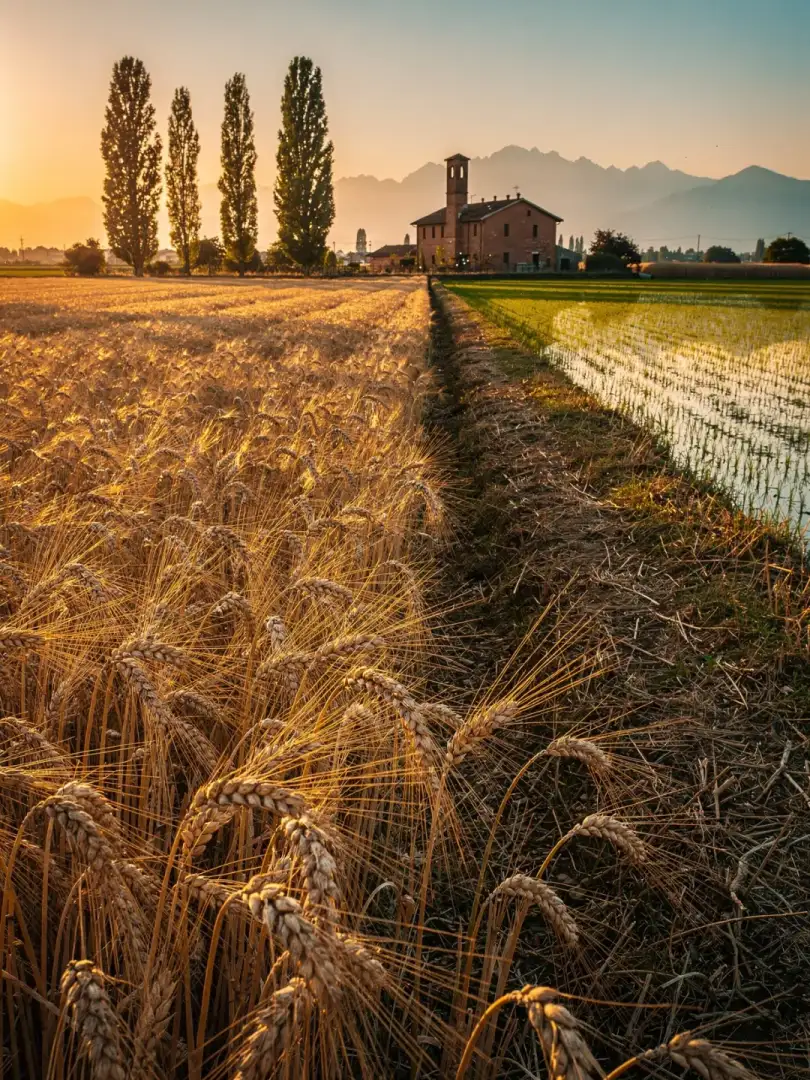
The Lombard landscape is better known for rice and corn than for beer. In the Po Valley around Pavia, rice grows that ends up in risotto, not in the mash tun. For a Pils, though, barley is all that counts, and the rule applies: the paler the malt, the clearer the malt character in the glass.
The style guideline for German Pils sets the original gravity at 11 to 12.4 degrees Plato. Original gravity refers to the sugar content of the wort before fermentation, and it determines how much alcohol will later develop. This range yields roughly 4.4 to 5.2 percent alcohol, with a color of 4 to 8 EBC. EBC is the European color scale, where a low value indicates a pale beer.
Birrificio Italiano models its Tipopils on German and Czech examples. A Pilsner malt forms the base, lending light notes of bread and honey. Darker malts would add more malt depth, but they're absent in a Pils so the hop aroma can take center stage.
During mashing, hot water releases the malt sugars from the grist; this is followed by lautering, the separation of the spent grain from the sweet liquid. The cleaner this process goes, the clearer the Pils turns out.