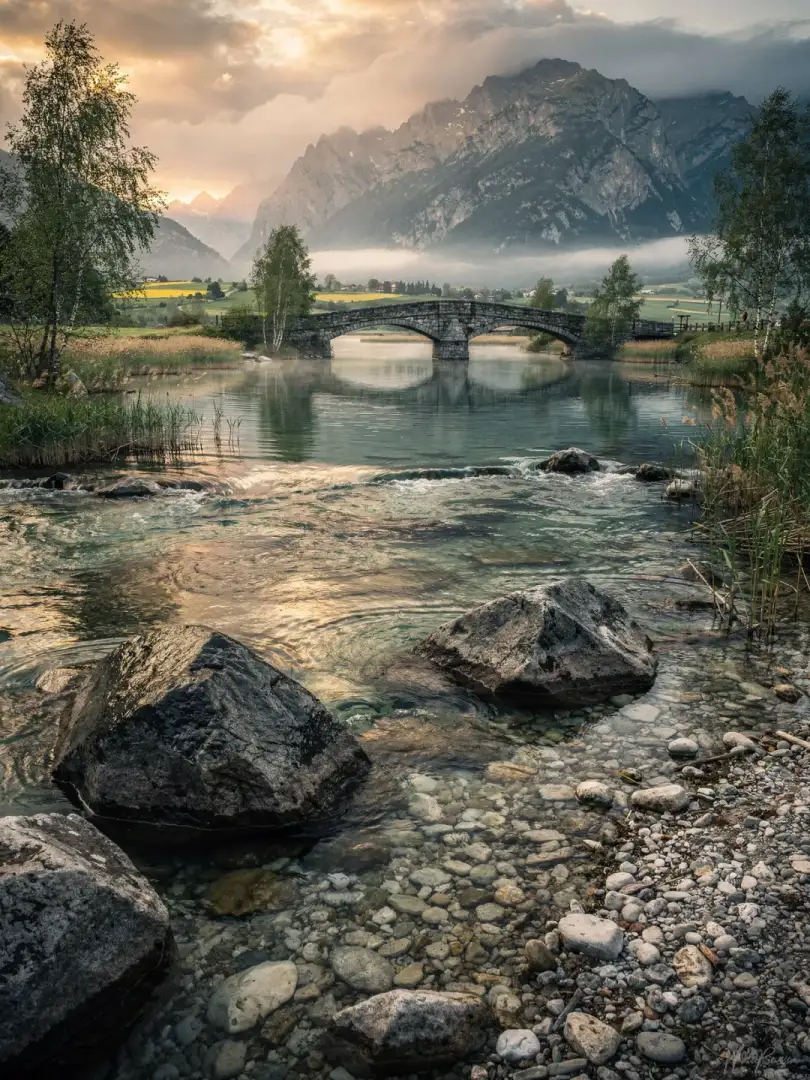
Alpine Water, the Po Valley
Water & Soil
In the north of Lombardy lie the Alps with their lakes; to the south stretches the Po Valley. In between flows, among other rivers, the Lambro, which rises north of Milan and joins the Po south of the city. Today, Birrificio Lambrate's production facility stands on its banks, on Via Sbodio.
Milan's tap water comes from groundwater. On its way through the gravel and sand of the plain, it picks up lime, and such water tends to be harder than the rainwater from the mountains. A Pils doesn't take well to that. It depends on a clean, dry bitterness, and that bitterness turns dull and harsh when the water is too hard.
That's why brewers adjust their water. They soften it or add salts until it suits the beer style. This holds true almost everywhere in the world today, including Lombardy: water decides the style less than it used to, while the recipe matters all the more.
The climate of the plain is continental. Summers are hot and humid, winters foggy and cold. For bottom-fermented beers, which are fermented and matured cool, cooling is essential. Old brewery cellars like those in Bavaria are rare here; a modern cold room with cooling tanks takes their place. How the yeast works there is explained in the station on yeast and fermentation.
Birrificio Italiano in Lurago Marinone also doesn't use untreated well water but adjusts its water to suit the recipe. The Navigli, Milan's old canals, still recall how vital water once was to the city: they carried goods, marble, and grain all the way to the center.