Cool in the Rock Cellar
Yeast & Fermentation
Top-fermented or bottom-fermented—that's the first question for any beer. The major beers from South Tyrol, Forst Premium, Forst Kronen, and the V.I.P. Pils, are lagers and therefore bottom-fermented. The yeast works at cool temperatures, usually between 8 and 12 degrees Celsius, and settles to the bottom at the end.
Fermentation is followed by lagering, which gives the lager beer its name. Over weeks, the young beer continues to mature in the cold, the yeast settles out, the carbonation binds, and rough edges smooth over. That's why a lager tastes so clean and calm.
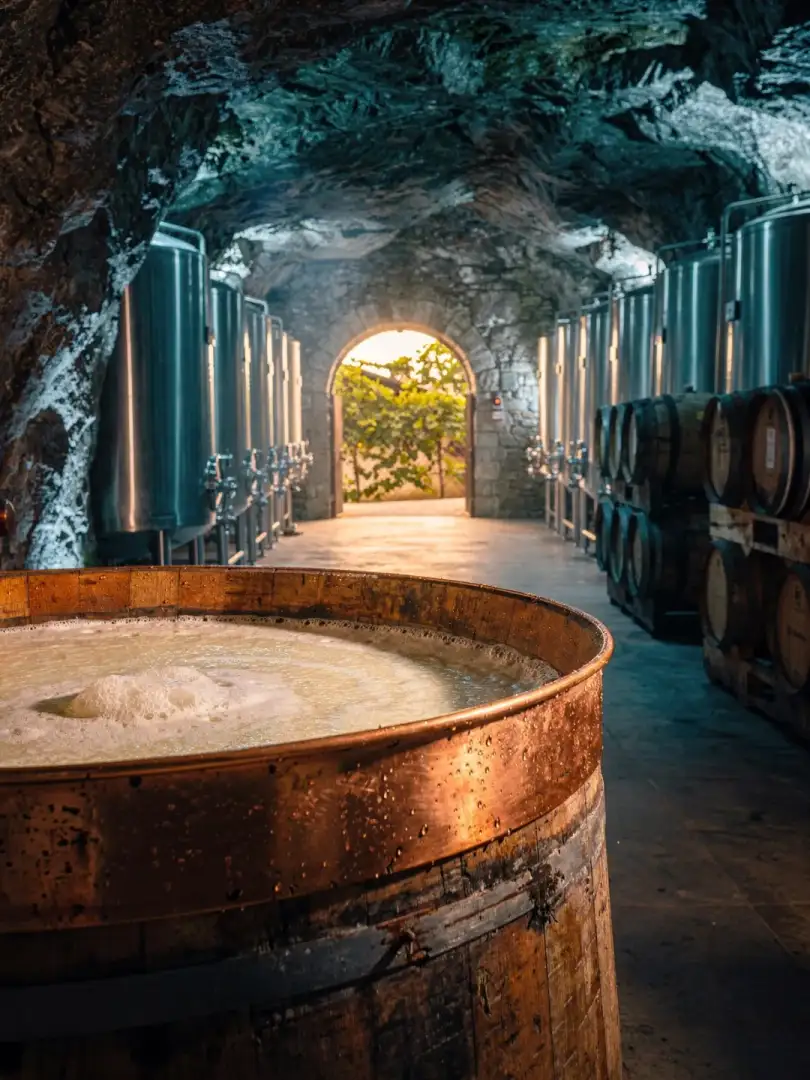
In the past, the mountain helped with this. The rock cellar kept the beer evenly cool, even when summer heat lay over the Meran basin outside. Today technology provides the cooling, but the principle remains: cold, slow, unhurried. Forst still produces a beer called Forst Felsenkeller, carrying the name of the old cellar to this day.
Craft breweries have more room to maneuver. According to its own information, Batzen Bräu in Bolzano brews Vienna Lager, Dunkel, IPA, and Porter, among others. IPA and Porter are top-fermented beers, whose yeast works warm and floats on top. They deliver fruitier aromas than lager yeast.
The difference can be tasted. Top-fermenting yeast at 18 to 22 degrees Celsius forms fruity esters reminiscent of pear, banana, or citrus. Bottom-fermenting yeast stays restrained during cold fermentation, letting malt and hops take center stage. Both are craft, and anyone wanting to compare styles will find both sides represented in Bolzano and Meran.