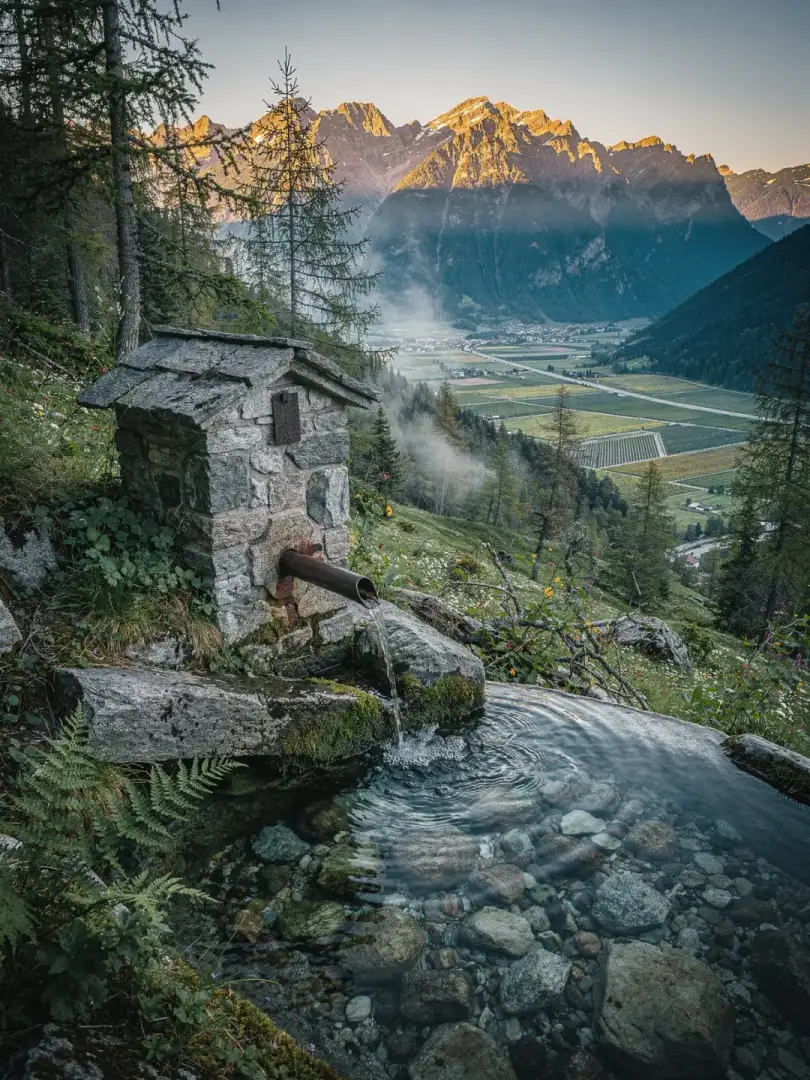
Marling Mountain Water
Water & Soil
Where does the water for Forst come from? From springs on Marling Mountain above Meran. There it's collected, flows downhill through iron pipes, and gathers in a large basin above the brewery. Gravity does the rest—pumps are barely needed for that first step.
Water matters because beer is roughly nine-tenths water. Minerals in the water change how hop bitterness comes across: very soft water lets it taste clean and fine, while hard water makes it harsher. Using mountain spring water typically yields low-mineral water, which keeps a pale lager clean and easy-drinking.
Meran sits in a basin surrounded by high mountains. In winter it stays milder there than in the valleys around it, and in summer it gets warm. For beer meant to be stored cool for long periods, that's a drawback, since the heat has to be kept out.
In the past, the rock itself helped. The storage cellars of the Forst brewery consisted of eight sections, three of them carved into stone. Across 830 square meters, 9,000 hectoliters of beer once found space, resting quietly and cool at a steady temperature. Even today, the name "Forst Felsenkeller" recalls that coolness within the mountain.
The Passer, Adige, and Eisack rivers run through the region, supplying the water that reaches the fields and the orchards and vineyards. For brewing, most operations use spring or tap water rather than river water. That's the true richness of this terroir: it delivers cold, clean water from the heights.