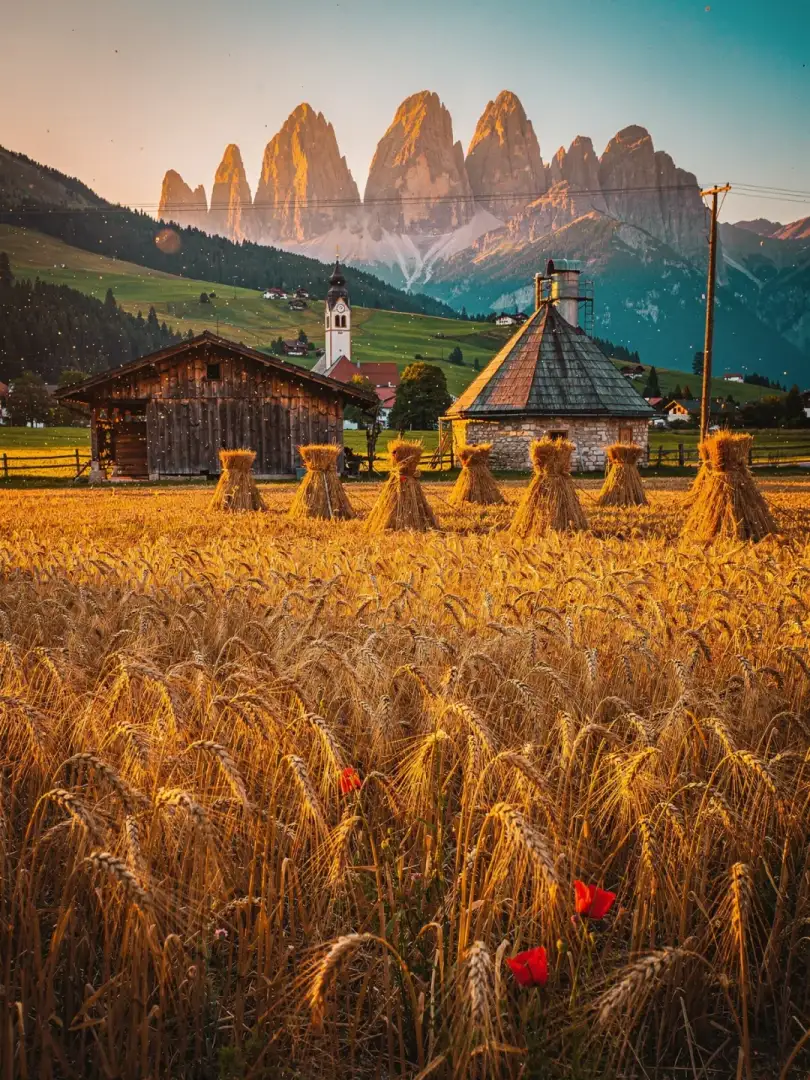
Val Pusteria Barley
Malt & Grain
Golden grain fields are found in South Tyrol especially in Val Venosta and Val Pusteria. Barley grows there, which brewers have malted. The color of the beer, it's often said, echoes these fields in late summer.
How does barley become malt? The grains are first soaked in water and begin to sprout; the maltster then halts growth with heat. This drying process is called kilning. The longer and hotter the grains sit in the kiln, the darker and more roasted the resulting beer will be.
Malting itself is a young idea in this region. In 1997, plans emerged in Val Pusteria to establish a malthouse and a brewery while encouraging local cultivation of brewing barley. From this idea came Val Pusteria Freedom, a brewery built on regional ties.
A pale malt, as used for Pilsner and Export styles, is only lightly kilned. It gives the beer its golden color, a flavor of fresh bread, and a delicate sweetness that balances the bitterness.
Forst Sixtus uses darker malt as well. According to the brewery, this beer was first brewed in 1901 and is a double-malt beer: it tastes of roasted malt, has a deep color, and a spicy caramel note. Dark malt brings these notes because intense heat causes sugars and proteins in the grain to react with each other. Baking and roasting work on the same principle.