Coolness in the Heat
Yeast & Fermentation
Is Red Stripe a lager or an ale? Today it's a lager, meaning bottom-fermented. That means the yeast works at low temperatures of around 8 to 12 degrees Celsius and sinks to the bottom at the end of fermentation. The first Red Stripe from 1928, by contrast, was an ale, top-fermented, with yeast that works at room temperature and floats on top.
Lager yeast isn't a distinct original species. It's a hybrid of the ale yeast Saccharomyces cerevisiae and the species Saccharomyces eubayanus, which was described in Patagonia in 2011. Together, both parent strains tolerate cold and ferment the malt sugar very completely, giving a lager its clean, quiet aroma.
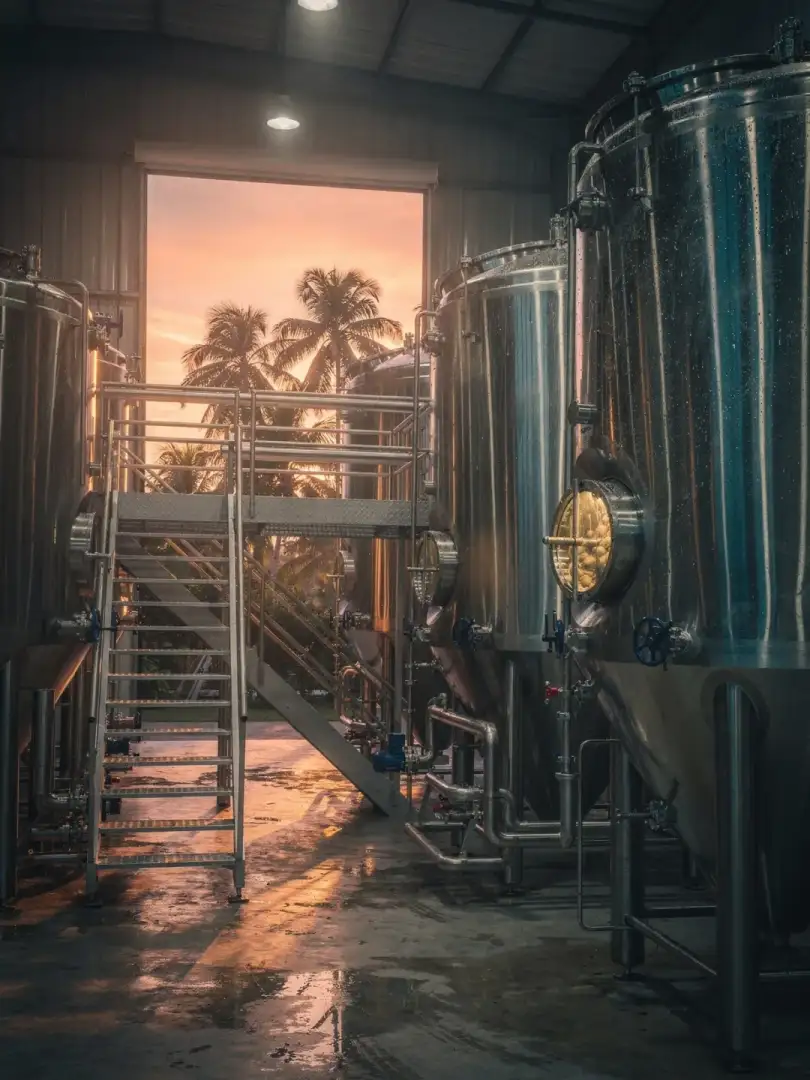
This process is demanding in a tropical country. Outside it's warm, while the fermentation cellar needs to stay cool. A lager brewery in Kingston therefore needs refrigeration systems and insulated tanks, not the natural rock cellar found in Franconia. A lager also needs time to mature, during which secondary aromas break down. How long Red Stripe is conditioned is something the brand doesn't disclose. This is another way a lager differs from an ale: an ale is ready to drink after days to a few weeks, while a lager generally needs longer before it's filtered and bottled.
The Foreign Extra Stout, by contrast, is top-fermented. Warm fermentation produces fruity secondary aromas, which in the stout merge with the roasted character into notes of dark berries and cocoa. The style is considered robust and high in alcohol; the style guideline lists 6.3 to 8 percent ABV.