Hops from Overseas
Hops
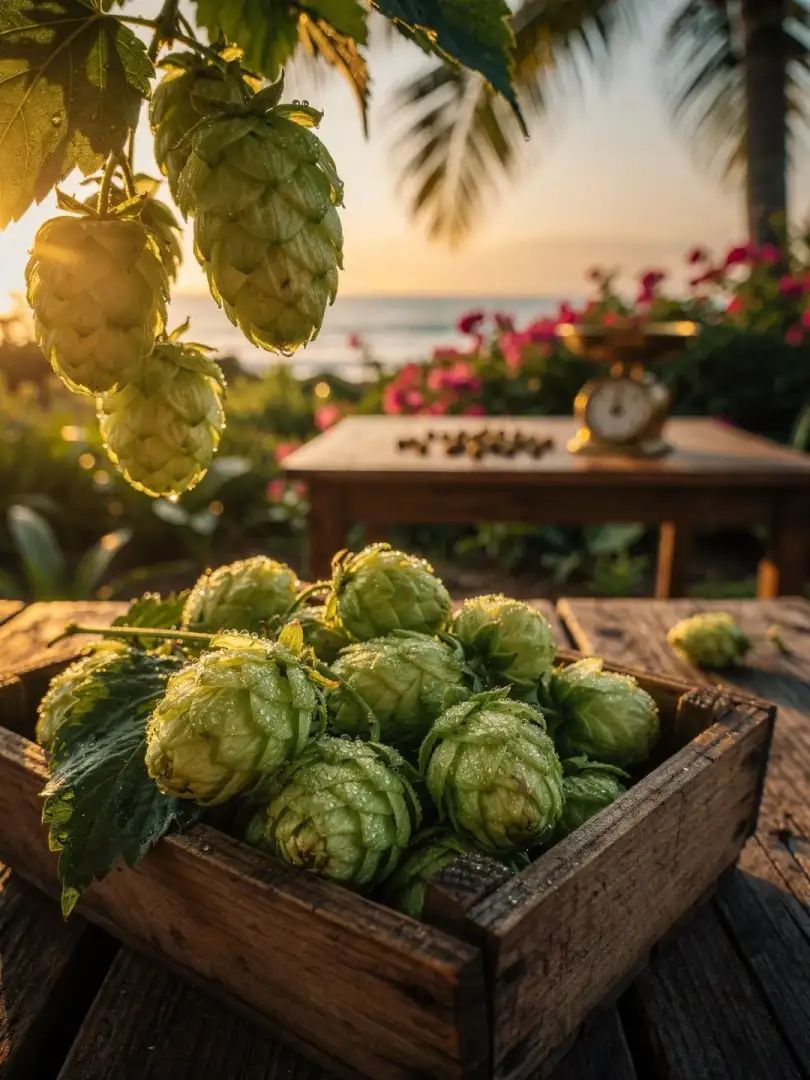
Does hops grow in Jamaica? No, not for the brewery anyway. Hops is a climbing plant of temperate latitudes. It needs long summer days and a cold winter dormancy, and neither exists at 18 degrees north latitude. The hops for Jamaican beer therefore comes from elsewhere, from growing regions where it thrives. So anyone cracking open a Red Stripe in Kingston is holding a raw material that has traveled thousands of miles. This applies equally to hops and malt; only the water and the sugar are from the island.
Which varieties define Red Stripe is something the brand doesn't disclose in any verifiable way. What's certain is the role of the hops: it supplies the bitterness that balances the sweetish malt body, along with aromas ranging from herbal to floral. Bitterness is measured in IBU, a unit for the bittering compounds in beer. An international pale lager sits at roughly 18 to 25 IBU according to the style guidelines of the beer judges, making it mild.
With the stout, the hops are more assertive. Guinness states that this style was brewed with more hops and more alcohol in the early 19th century so it could survive long sea voyages to the Caribbean. Hops also act as a preservative: its bittering compounds inhibit certain microbes.
The style guideline for Foreign Extra Stout lists 50 to 70 IBU. That's a lot, but it's masked by the roasted aroma. Anyone drinking the stout tastes coffee, cocoa and sweetness first. The bitterness only shows up in the finish, like a dry edge.