Barley, Rice, Koji
Malt & Grain
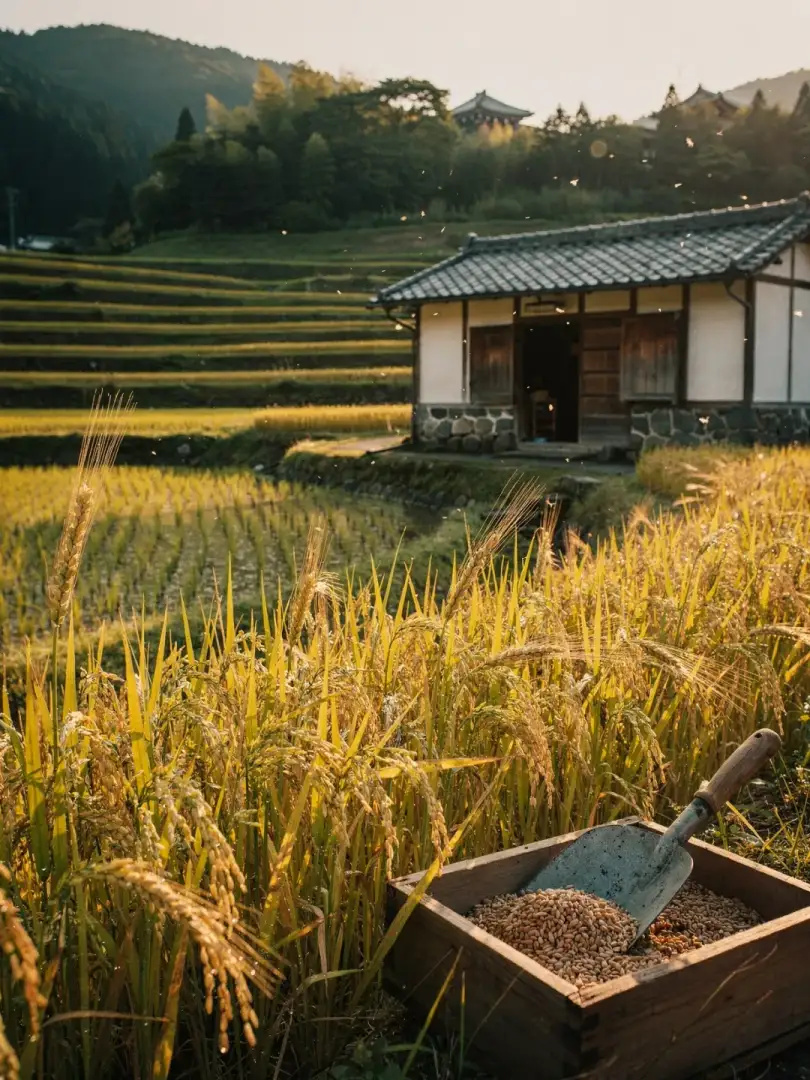
The fields around Kyoto and Osaka are planted mainly with rice. The region has to import most of its brewing barley, and many craft brewers in Japan likewise source their malt from abroad. Malt is barley that has been germinated and then kilned, or dried, giving beer its color, sweetness, and body.
Rice still finds its way into beer, though, as an adjunct. In pale lagers, it replaces part of the malt, making the beer lighter, paler, and drier. The age-old craft of rice cultivation remains very much alive in Kansai, as seen with Yamada Nishiki, the sake rice grown in Hyogo Prefecture, home also to Kobe.
One distinction is fundamental. In sake, the mold Aspergillus oryzae, known as koji, converts rice starch into fermentable sugar. In beer, this job falls to the enzymes in malt, activated during mashing, the process of steeping grain in hot water. So beer needs no mold, and sake needs no malt.
Japanese tax law governs how much malt must go into beer. Since the 2018 reform, the malt content must be at least 50 percent, and additional ingredients like fruit or spices are permitted. As a result, there's no Reinheitsgebot-style purity debate here as there is in Germany.
Dark-roasted malt defines beers like stout. Minoh Beer describes its stout as showing notes of coffee and dark chocolate, soft in body with a dry finish. Yuzu, sansho pepper, and tea from Uji are considered classic Japanese ingredients that craft brewers love to experiment with. In Fushimi, meanwhile, the sake houses work with polished rice, where part of the outer layers is milled away, and Kizakura brews its beers in this very setting.