Spring and Tunnel
Water & Soil
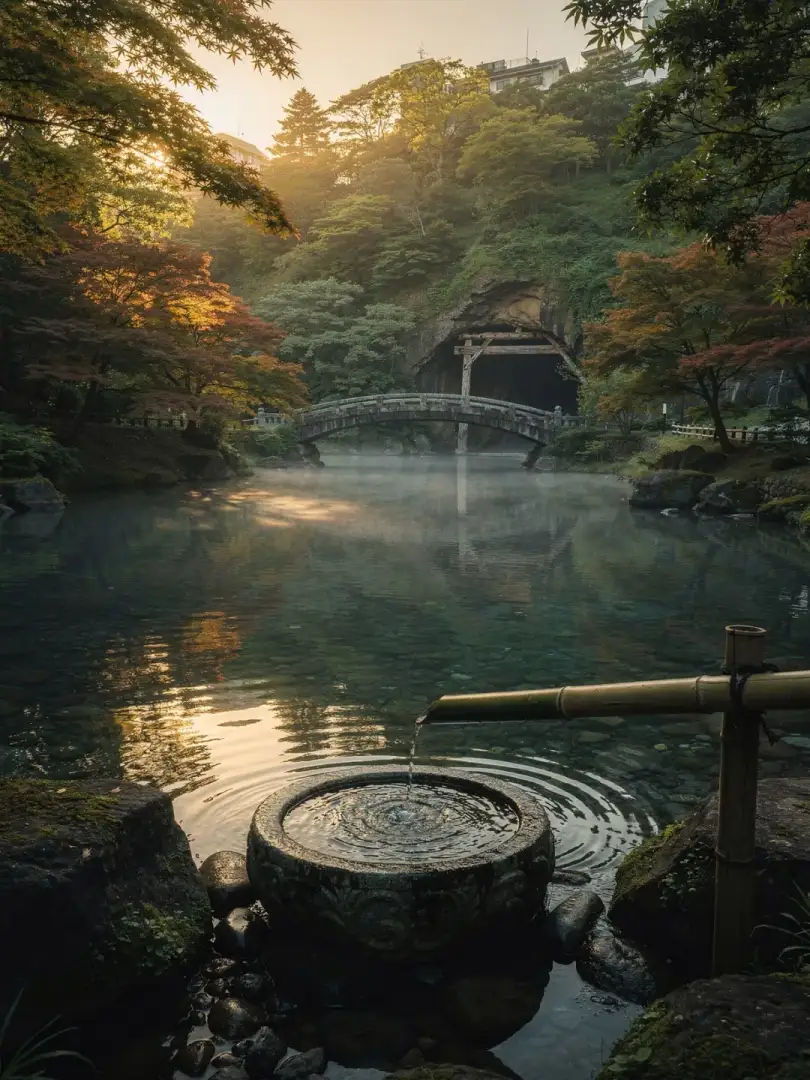
Copeland chose his site for the water. At the foot of Yamate hill, a spring bubbled up next to Amanuma Pond, and that's exactly where he placed the brewery. Fresh water matters more for a beer with little hop character and little malt aroma than it does for a robust dark beer.
Japan's drinking water is mostly soft, meaning low in dissolved minerals, especially calcium. Tokyo draws most of its water from rivers, including the Tone. Soft water suits pale, slender beers well, since it brings no hardness into the wort. It's the same logic familiar from Pilsen.
Today, breweries treat their water regardless. A major Tokyo brewer wants the same beer in the glass every single day, whether the raw water runs cloudier after a typhoon or not. So the spring matters less for the recipe these days than for the brand's self-image: it belongs to the founding story.
The hillside soil served a second purpose. Copeland drove a tunnel into the hill, since the rock stays cool year-round. Summers in Yokohama and Tokyo are hot and humid, and a lager needs to mature cold to stay clean. Without refrigeration, the rock was the only option.
Little remains of Copeland's brewery in Yamate today. But in the Ebisu district, on the site of the old Yebisu factory, stands a museum with a small brewery that resumed operations in April 2024.