Rain, Snow, Lakes
Water & Soil
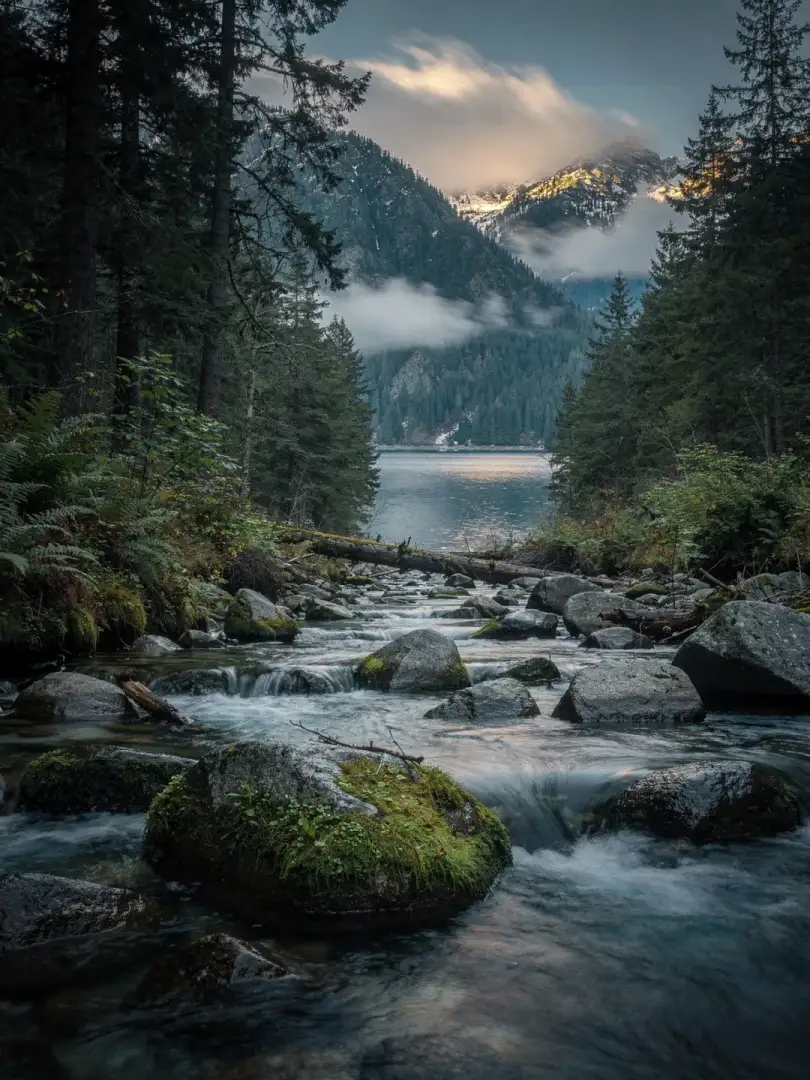
Where does Vancouver's brewing water come from? The city drinks water from reservoirs in the mountains of the North Shore, from the Capilano, Seymour and Coquitlam watersheds. Lots of rain falls here on the humid Pacific coast, and snow lingers through the winter. The water that results is low in minerals and soft.
Soft water lets malt and hops speak clearly. It carries little carbonate, which would otherwise dull the bitterness, so it suits pale, hop-forward beers well. Anyone wanting a sharply defined West Coast IPA aroma starts with a base like this.
That said, it's no longer something you can rely on. Almost every brewery worldwide now treats its water, adding salts or removing hardness, and in British Columbia, too, water has long been part of the recipe. The idea that terroir shapes the style is a story from the past.
Still, the landscape shapes the brewing locations. In Vancouver, many breweries sit in old warehouses and workshops, and Granville Island itself was once an industrial site beneath the Granville Bridge. Around Kelowna in the Okanagan Valley, it's entirely different: dry, sunny inland country, orchards, and Okanagan Lake. There, brewers mainly need to keep things cool in summer.
Lagering cellars in the European sense are hardly needed on the coast. The climate is mild, and most beers are ales fermented at room temperature. Stainless steel tanks with cooling jackets replace the rock cellars used for storage elsewhere.