River and Hills
Water & Soil
Montréal sits on an island in the middle of the St. Lawrence River, and the river is also the city's water source. It carries water from the Great Lakes eastward, a huge catchment area that varies considerably with the seasons. Breweries don't draw their style from this variety, though. Nearly all of them treat their water anyway and adjust it to suit the beer they want to brew.
The soil tells an older story. Isolated hills rise from the plain — the Monteregian Hills. These include Mont Royal, which gave Montréal its name, and Mont Saint-Hilaire near Chambly. They're made of hard rock that once rose as molten magma and was later exposed. The surrounding plain is flat, fertile, and well suited to farming.
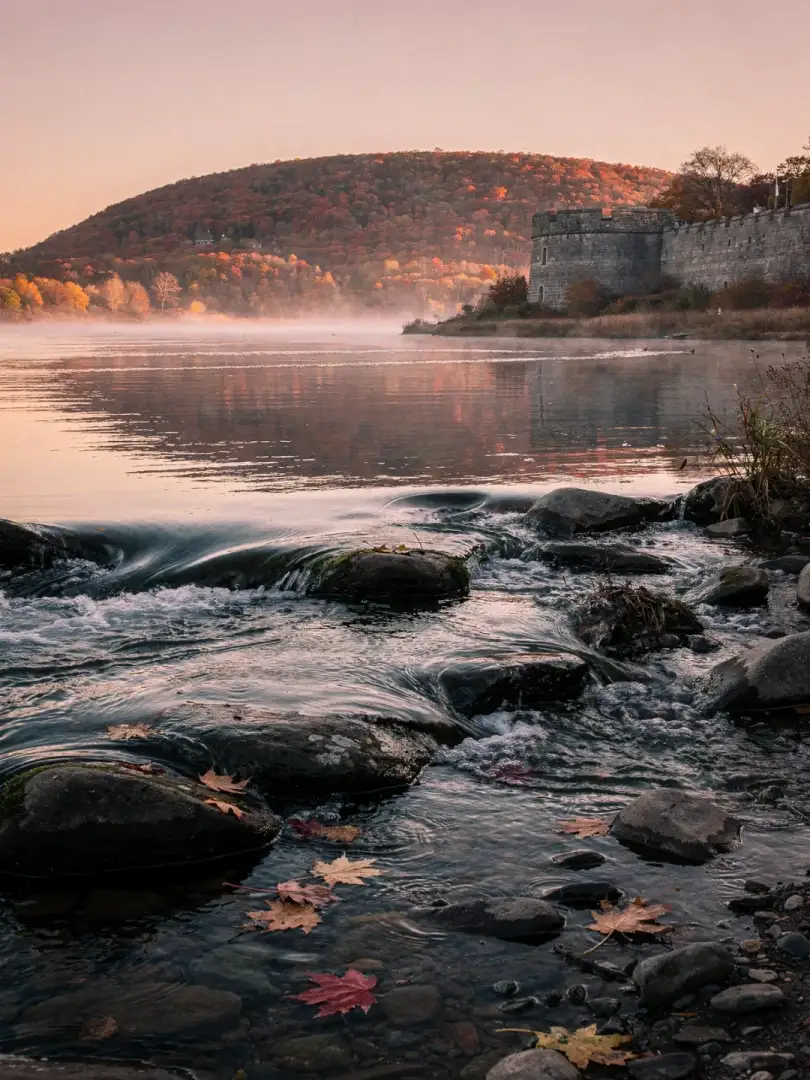
The Richelieu River is also part of the picture. It flows north from Lake Champlain and empties into the St. Lawrence. On its banks sits Chambly, the town where Unibroue brews.
You can't honestly pin a number on the hardness, ion content, or mineral levels of individual brewing waters here. For readers, it's enough to know: the river water is a raw material to be shaped, not a trait that gives a beer its character.
Climate shapes drinking habits more than brewing itself. Québec's winters are long and cold, its summers warm and humid, and people tend to reach for robust, dark beers in winter and pale ones in summer accordingly.