Long Journeys
Malt & Grain
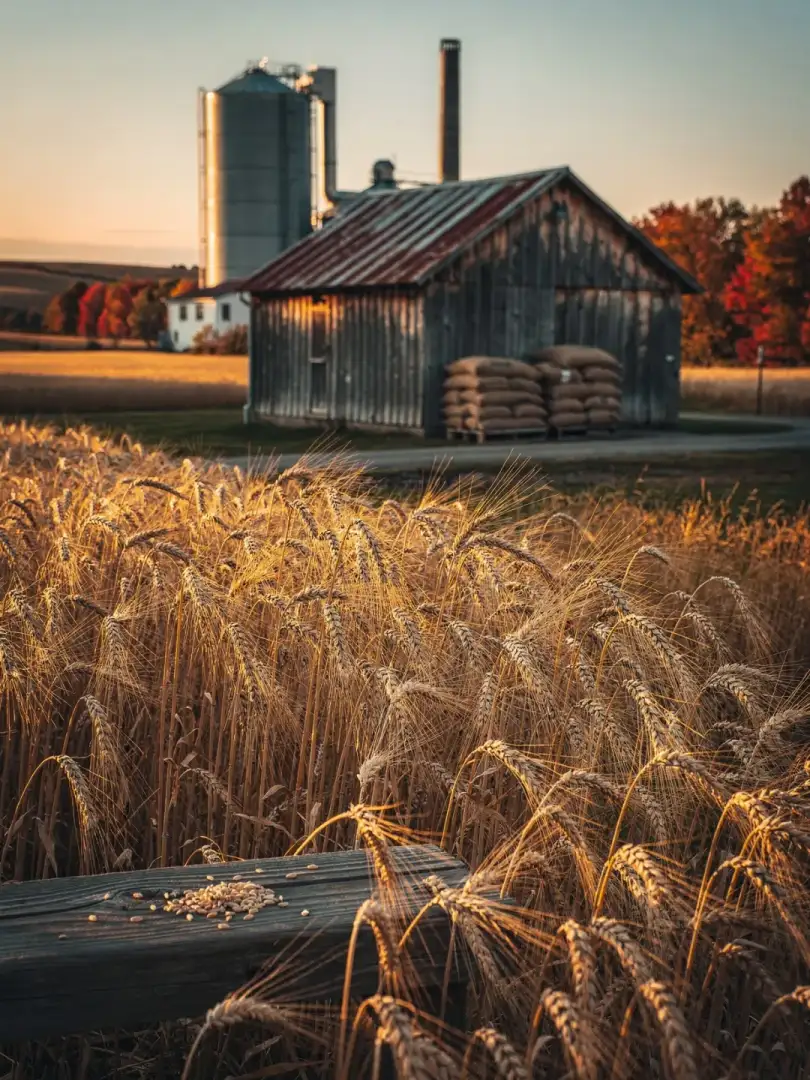
Canada's malting barley grows mainly on the prairies out west, far from Montréal. Québec's breweries therefore often source their malt from there or overseas, though a few work with barley and maltings from within the province. Malt is barley that's briefly germinated and then dried, so its starch can later be converted into sugar.
How a malt tastes comes down to the drying process. In the kiln — the malthouse's drying oven — pale pilsner malt stays nearly colorless and sweet under mild heat. Darker malts form under higher heat and taste of bread, caramel, and raisins. Drink one of the region's Belgian-style beers and you'll taste both: a tripel is built on pale malt, while a dark strong ale rests on caramel and roasted malts.
Roasted malt is dried almost to black and gives stouts their color and their flavors of coffee and dark chocolate. Dieu du Ciel! brews Péché Mortel, a stout with coffee added during production. As a result, the beer carries a double dose of roast character.
Sugar comes into play with the strong beers. Belgian brewers add candi sugar to the wort so the yeast can produce alcohol without making the beer sweet or heavy. Unibroue brought this brewing method to Québec and developed recipes inspired by Belgian originals.
Molson represents the other side of the coin: the pale, light malt-based lager that's part of everyday life. Its ingredients are less showy, but the beer is consistent and easy to drink.