Fermentation vs. Distillation
Yeast & Fermentation
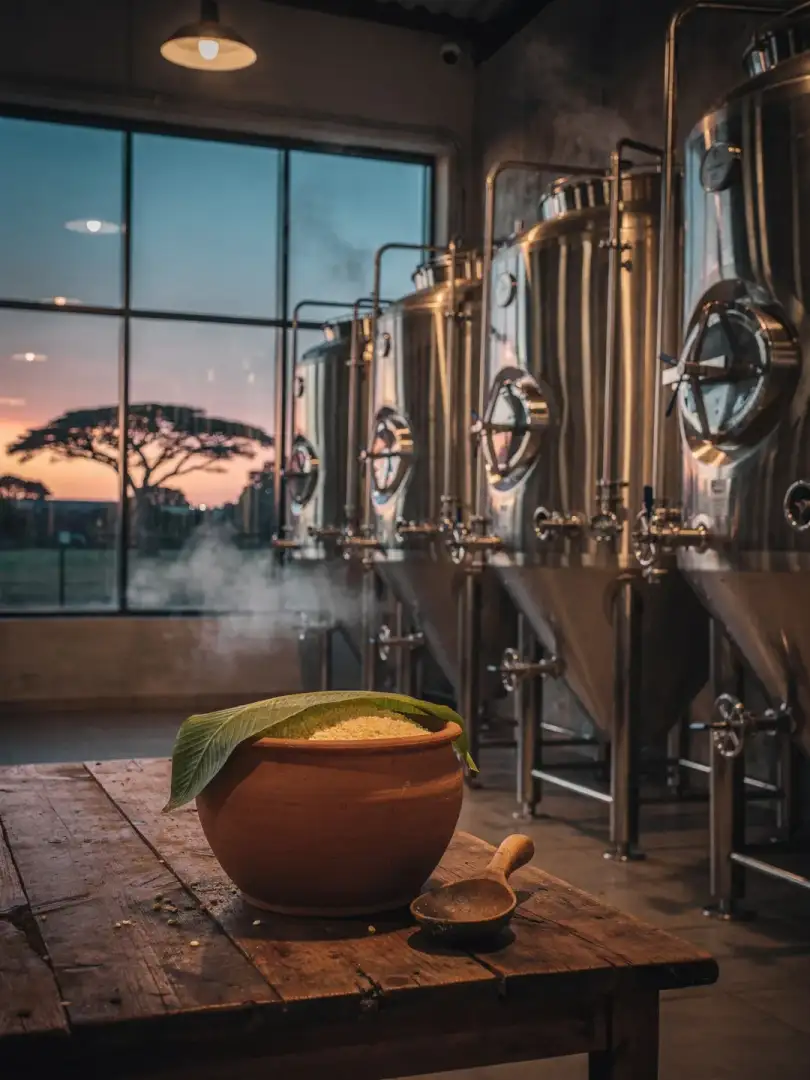
Is Busaa a beer and Chang'aa a spirit? Yes, and the difference comes down to a single extra step. Both begin with fermented grain. Busaa stops there: yeast converts the sugar into alcohol, and the cloudy drink is consumed within a few days. Chang'aa goes a step further and is distilled — heated so the alcohol evaporates and returns as liquid through a cooling coil.
How strong each drink is was shown in a study from Western Kenya that tested samples in the lab. Busaa averaged around four percent alcohol, Chang'aa around thirty-four percent, with wide variation. The first drink is about as strong as a beer, the second as strong as a whisky. The two cannot be equated, even though both derive from similar raw materials.
Chang'aa is often distilled in homemade stills, sometimes made from oil drums, and has traditionally been a backyard drink in Kenya. With such makeshift distillation, there is a risk that methanol ends up in the drink. This alcohol is toxic. Just a few milliliters can damage the optic nerve, and larger amounts are fatal. Reports of poisoning from improperly distilled spirits are part of this drink's history. This problem does not arise with brewed beer, since nothing is distilled.
The lager from the brewery is a different craft altogether. Bottom-fermenting yeast works at low temperatures and settles at the bottom once fermentation ends. The beer then conditions in the cold until it tastes clear and smooth. In a country on the equator, this requires refrigeration technology, since it never gets cold enough naturally anywhere. Nairobi's altitude helps, but it doesn't replace the machinery.
Small brewers in Nairobi also produce top-fermented beers. Ale yeast ferments warmer and faster and brings fruity notes along with it, which works well in East Africa with less need for cooling. This is how, alongside lager, beers such as a bitter ale or an IPA come about.